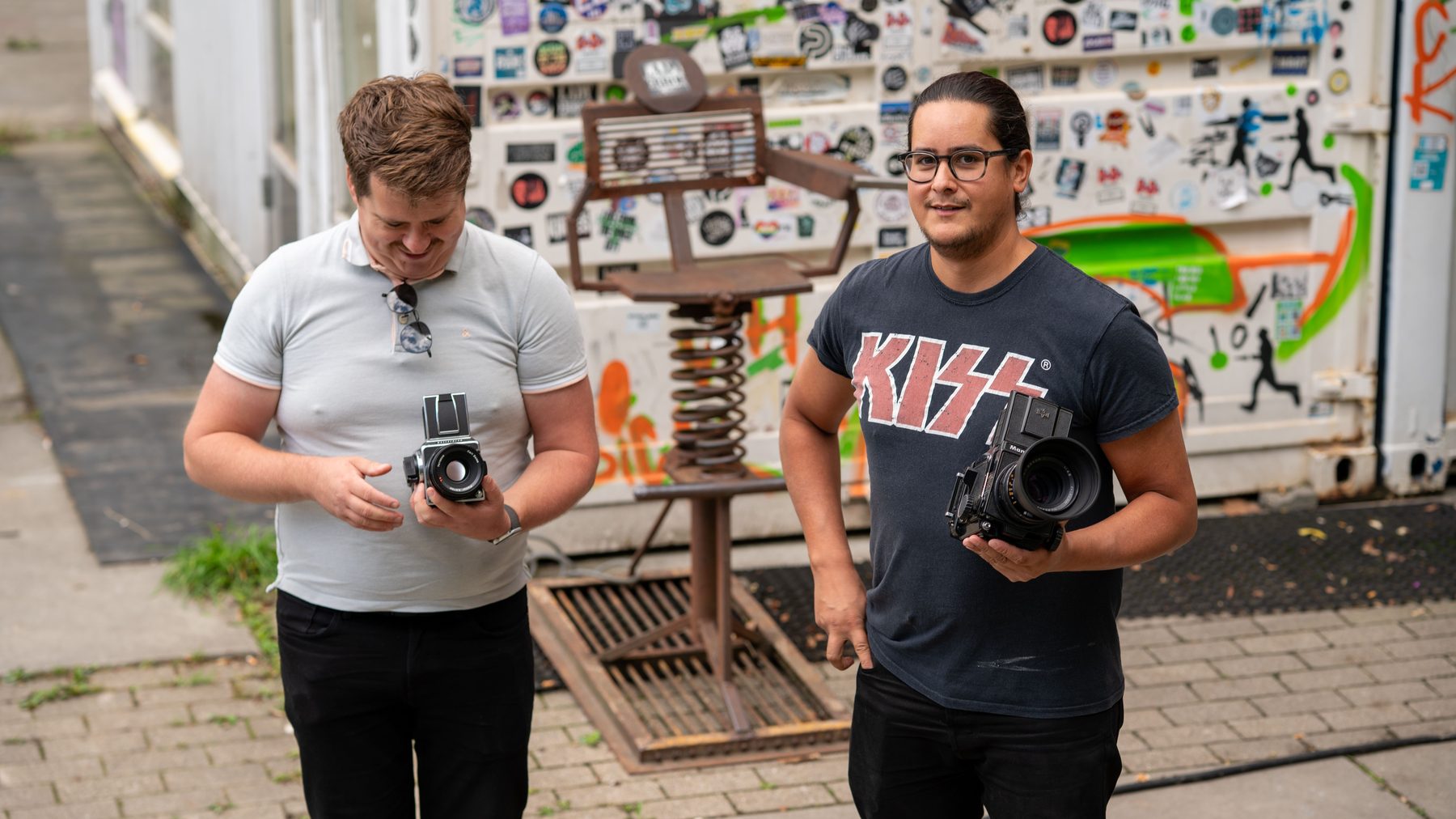
Two photographers, two routes into film
Rik Tonnard is 33 and has lived in Eindhoven for almost ten years. Photography became a serious hobby for him about a year ago. He was looking for something that would make him go outside more consciously and pay closer attention to his surroundings. He first bought a digital camera, but soon afterwards someone in the building where he works introduced him to analog photography. Before long, he noticed that the film camera came along more often than the digital one.
Street photography, landscapes, architecture, light and shadow attract him most. At the same time, Rik is quick to describe himself as a beginner and hobby photographer: he is mainly developing his own way of seeing and learning older photographic techniques.
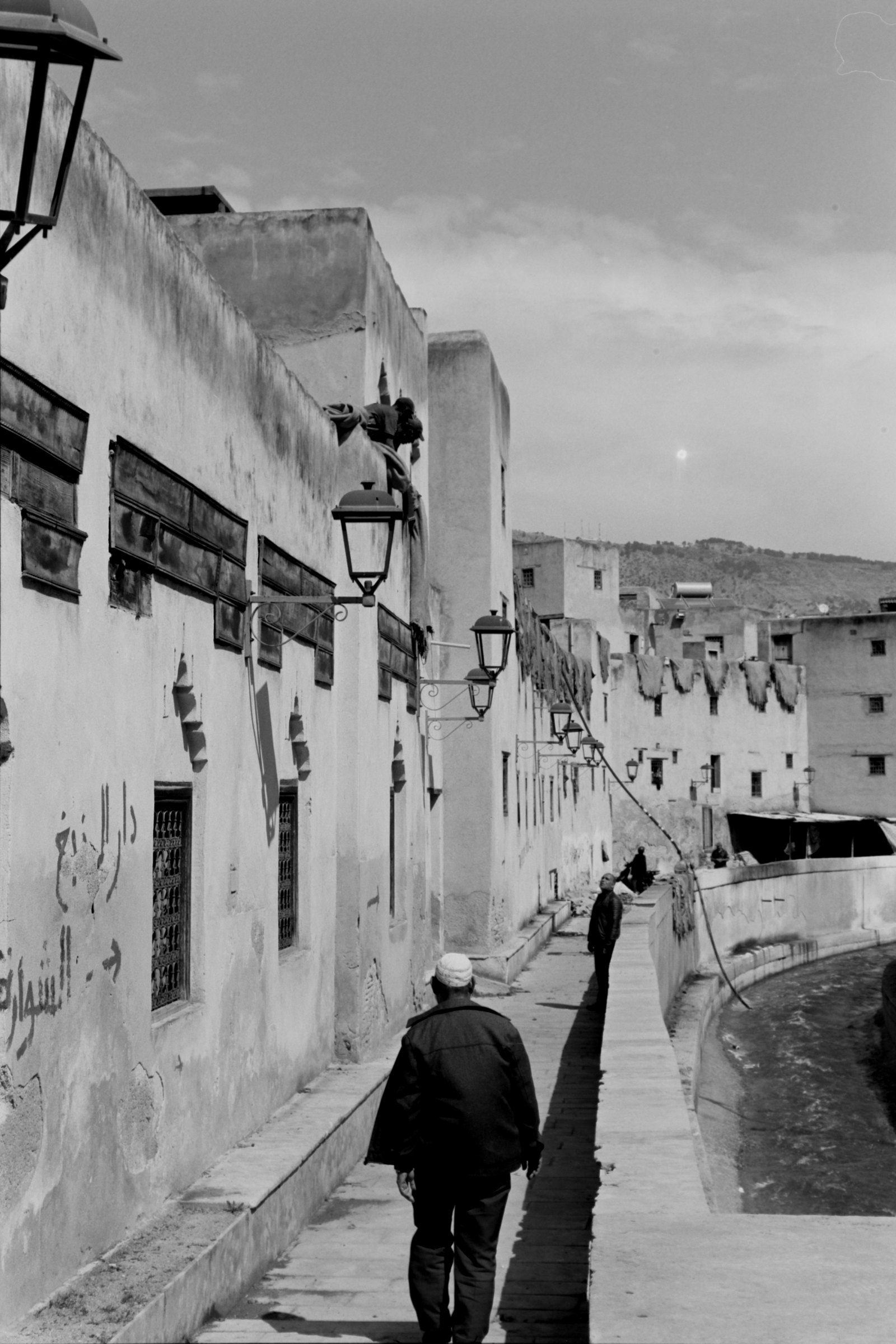
“You pay more attention to your surroundings because you cannot check the result. You simply have to wait and see.”
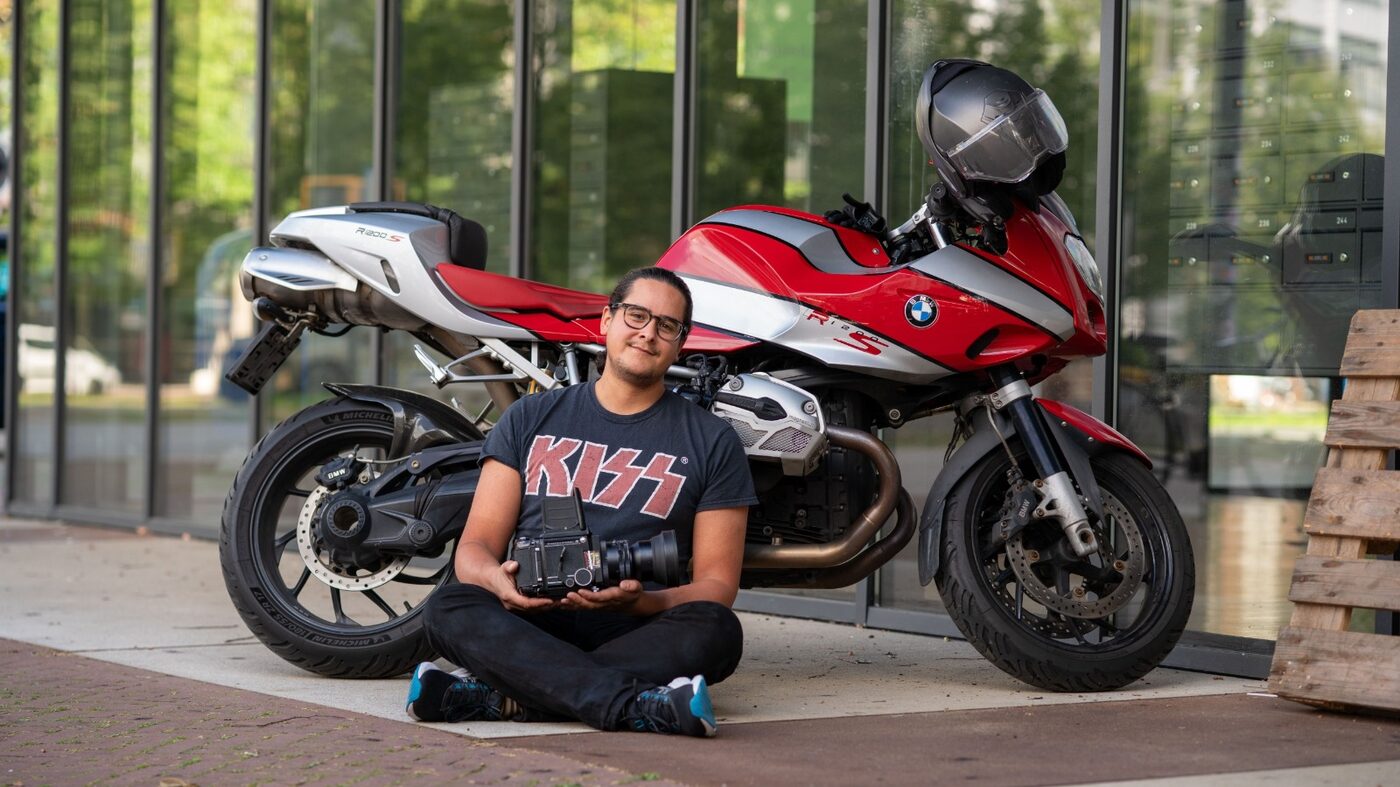
Miguel Soto grew up in Eindhoven and had cameras around him from an early age. Years later, a Pentax P1S at his grandmother’s house brought analog photography back into view. He loaded it with a roll of Kodak ColorPlus, had the images developed and became fascinated by the result.
Since the pandemic, Miguel has been building a personal archive of his analog photography. It now contains around five thousand images. He tries to carry a camera as often as possible and, when he can, take at least one photograph every day. Looking through that archive therefore feels like more than looking at pictures: it feels like travelling back through his own life.
“I try to always have my camera with me and just take one photo a day.”
Why choose film when digital is easier?
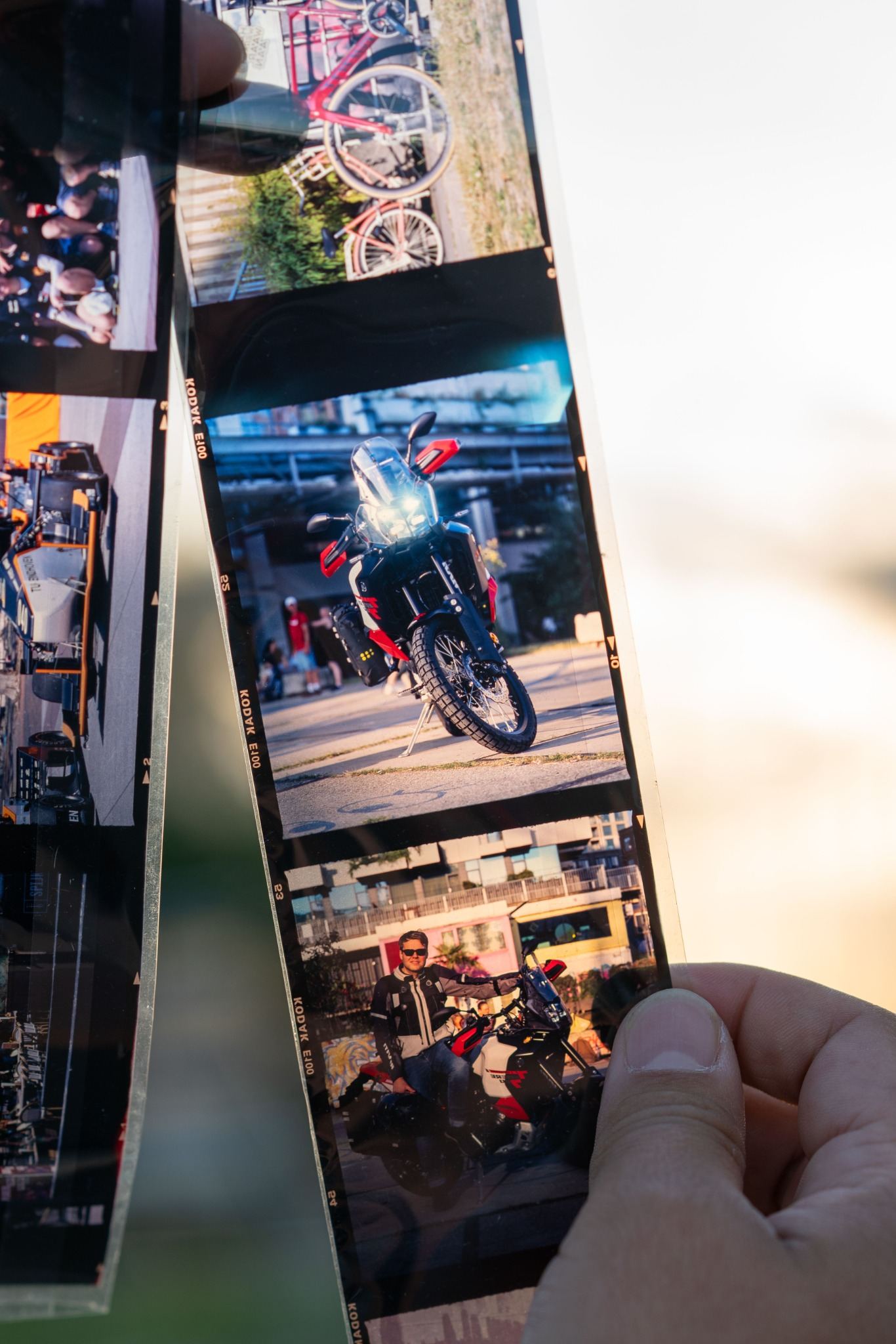
For Rik, part of the appeal is getting away from screens. With digital photography, it is easy to make ten or twenty versions of the same image and choose later. Film changes that rhythm. You do not see the result immediately and every frame has a real cost, especially with medium format. That naturally makes you think longer before pressing the shutter.
That slower process does not mean every photograph automatically becomes better. Even a carefully shot roll contains misses. Sometimes the moment is gone before you are ready. Miguel says that a roll often contains only one or two images that really stand out to him. That limitation is exactly what makes it interesting: you choose a camera, a film stock, a format and, ultimately, which situations are worth a frame.
“Analog really is a means to an end. In the end, you still have to point your camera at cool things.”
The process does not stop after the click
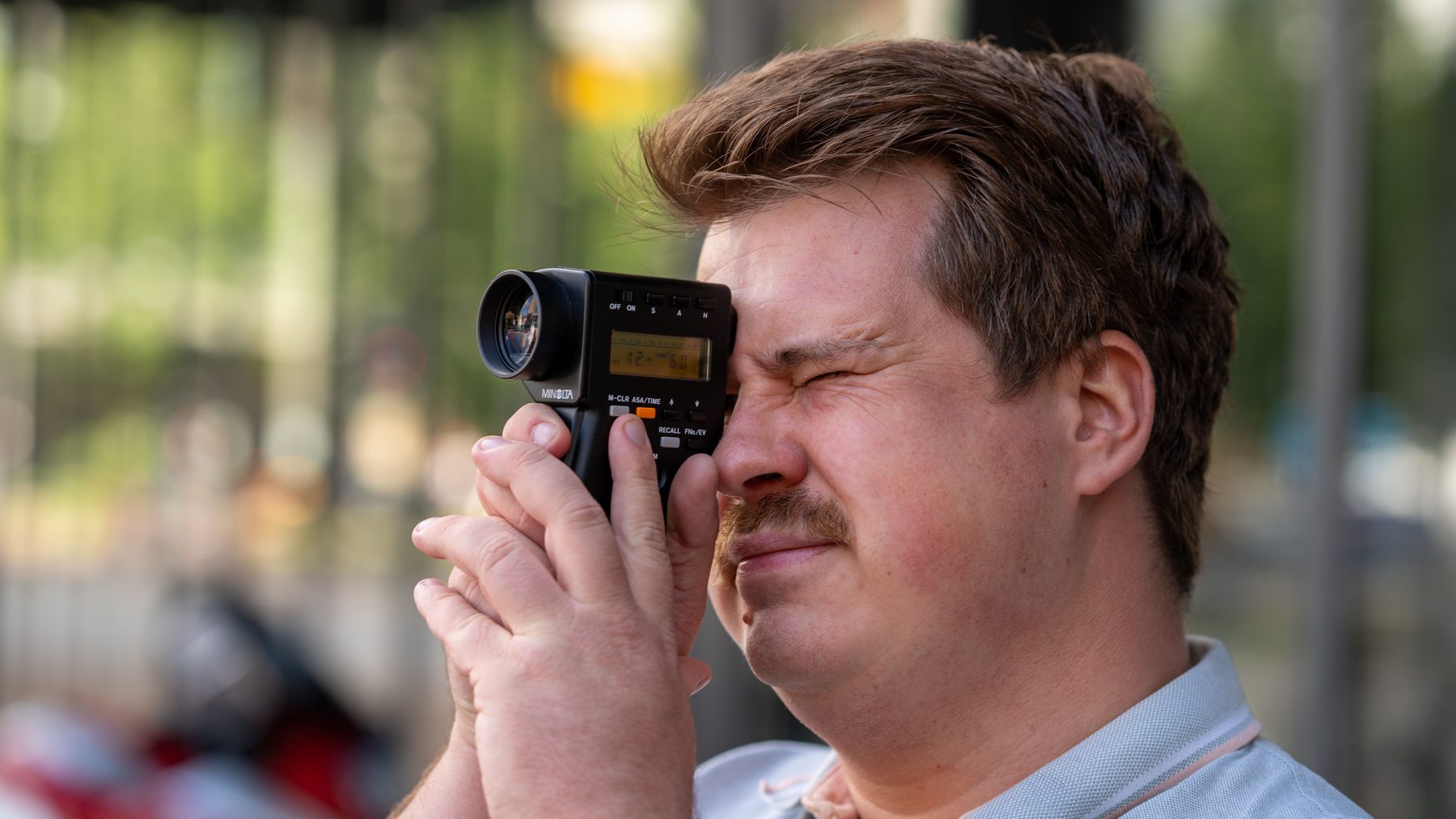
Rik is especially enthusiastic about the traditional process around film. He shoots a lot of black and white, develops film himself and regularly visits a darkroom to make prints. There, the photograph becomes a new series of decisions: crop, exposure, contrast and timing. For him, the negative is not the final product but a starting point.
He also explores the technical history of photography. He read Ansel Adams’ three-part series — The Camera, The Negative and The Print — to better understand how photographers thought about exposure, negatives and printing before the digital era.
That way of working has another practical effect: in a darkroom, your phone naturally disappears from view. The light has to be controlled and, for hours, everything revolves around the image in front of you.
From Hasselblad to point-and-shoot
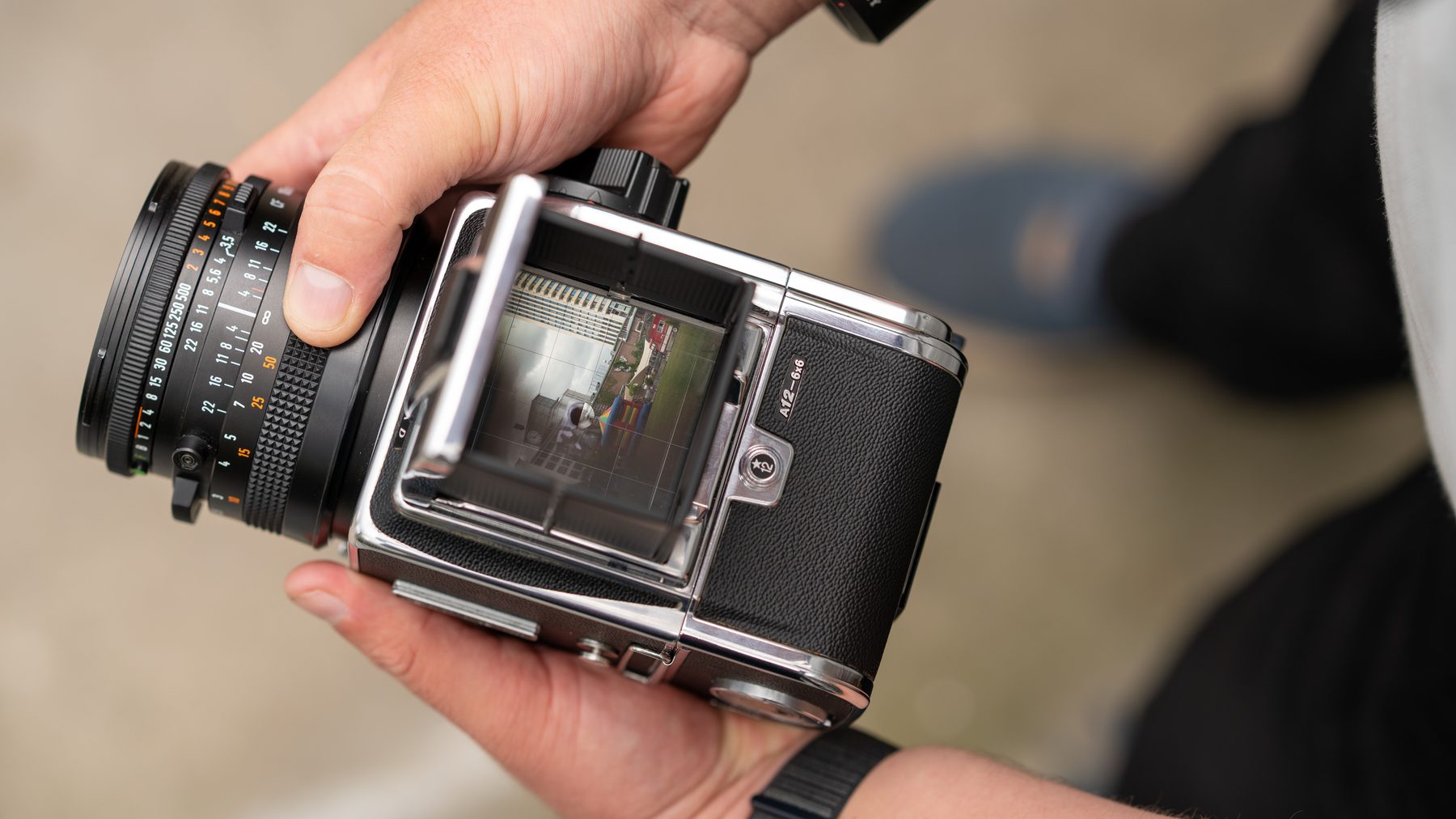
Ask analog photographers about cameras and the conversation quickly turns into a small tour through photographic history. Rik’s current favourite is his Hasselblad 500C/M. The medium-format camera produces square negatives, which means he has to compose differently from the usual 3:2 format. That limitation is exactly what interests him. He also enjoys 35mm for faster street photography, but the Hasselblad suits the slower pace he is looking for.
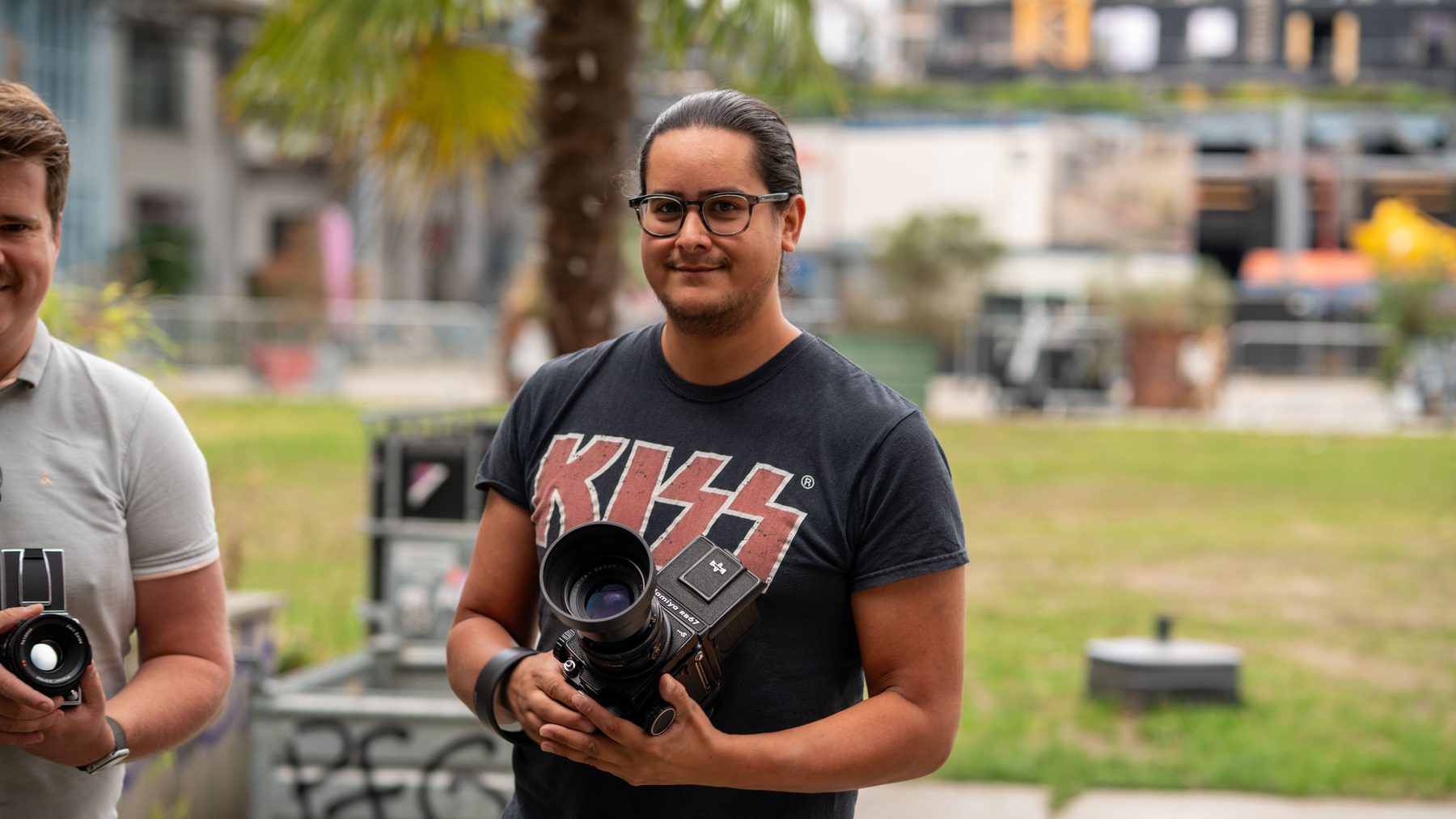
For Miguel, the favourite camera depends on the situation. The Mamiya RB67 is his choice when he wants maximum image quality and the character of a large medium-format negative. At the same time, his compact Pentax Espio 120 has a practical advantage no large camera can beat: it can simply stay in his bag all the time. Sometimes the best camera is the one you actually have with you.
Miguel also likes experimenting with the character of film itself: slide film, unusual colour films and, for example, Lomography Purple, which can transform familiar colours completely. Rik finds those experiments interesting too, but feels more drawn to traditional processes and to mastering the negative and print as well as possible.
Photographs that become more valuable over time
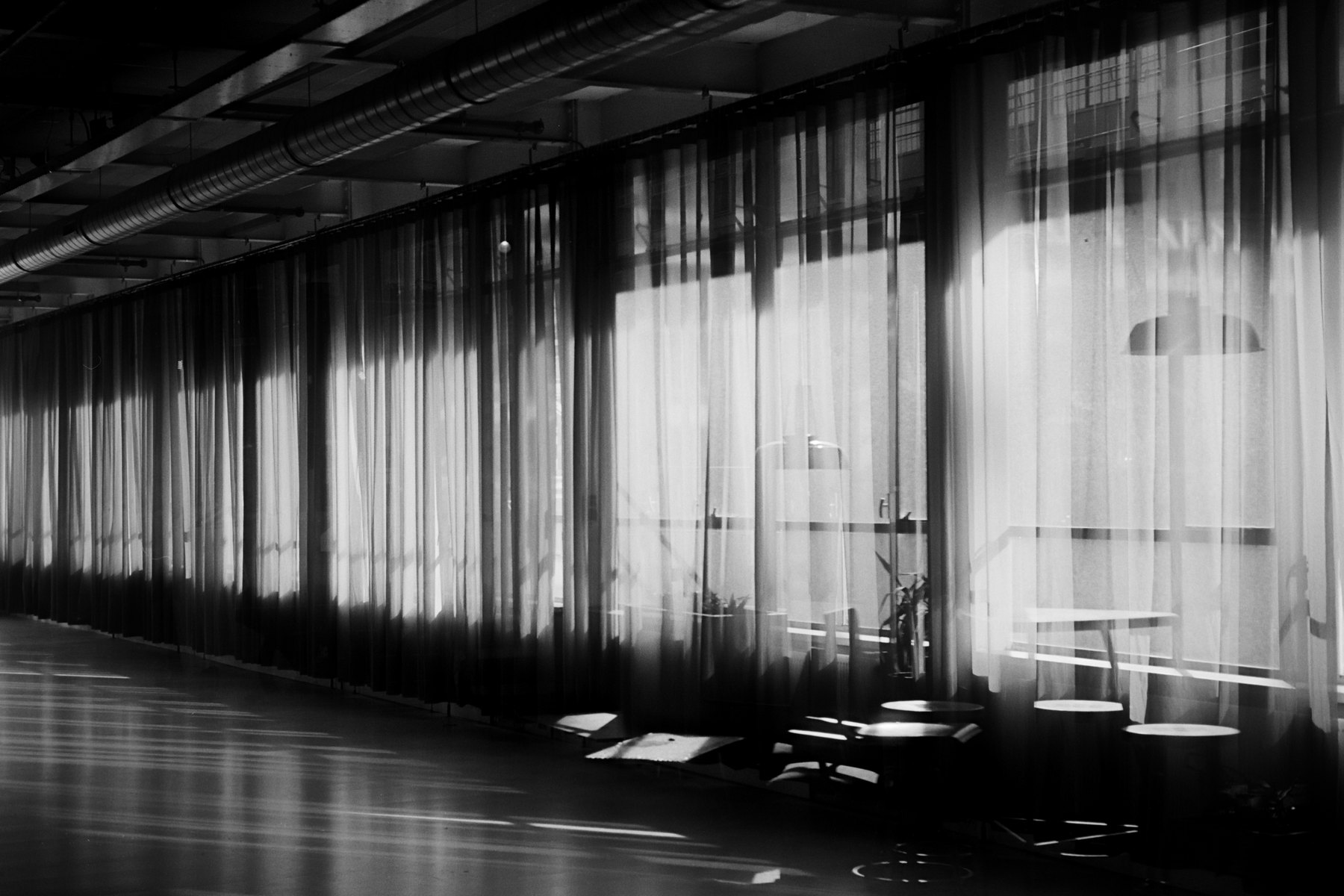
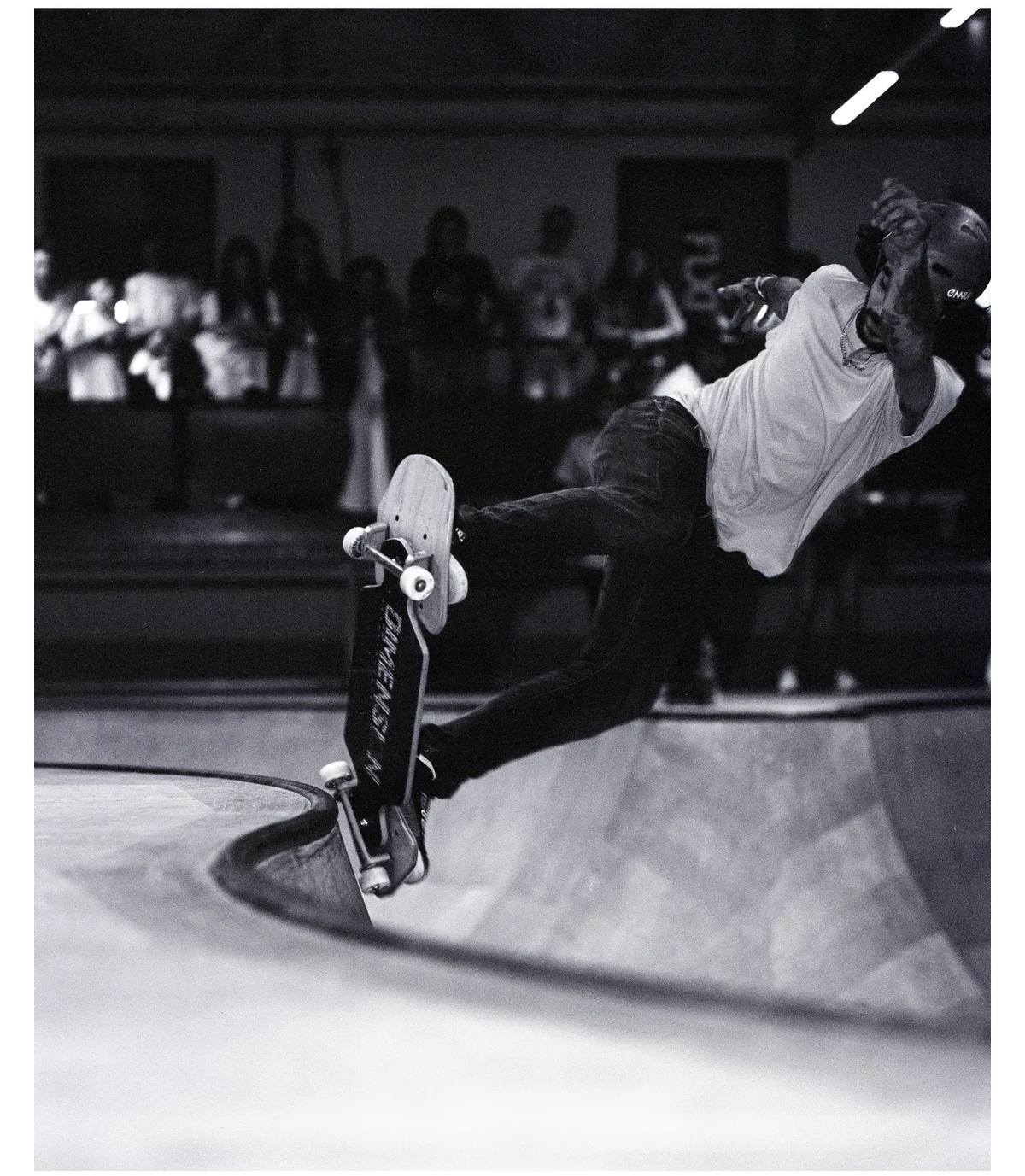
Ask which photograph matters personally and resolution and camera specifications quickly fade into the background. Miguel points to a black-and-white image he made with the Mamiya RB67 during a streetboard event at Strijp. A large, manually focused camera is not the most obvious choice for fast action, but that is exactly why getting the shot meant so much to him. Timing, focus and shallow depth of field came together perfectly.
Of the thousands of photographs in his archive, Miguel calls this the image he is most proud of.
For Rik, the most meaningful analog photograph was not made by him at all. While looking through old family photographs with his brother, he found an image of himself at around three years old. The print is roughly thirty years old, but it can still be held, passed around and rediscovered. To him, that makes visible what a photograph can mean as a physical object.
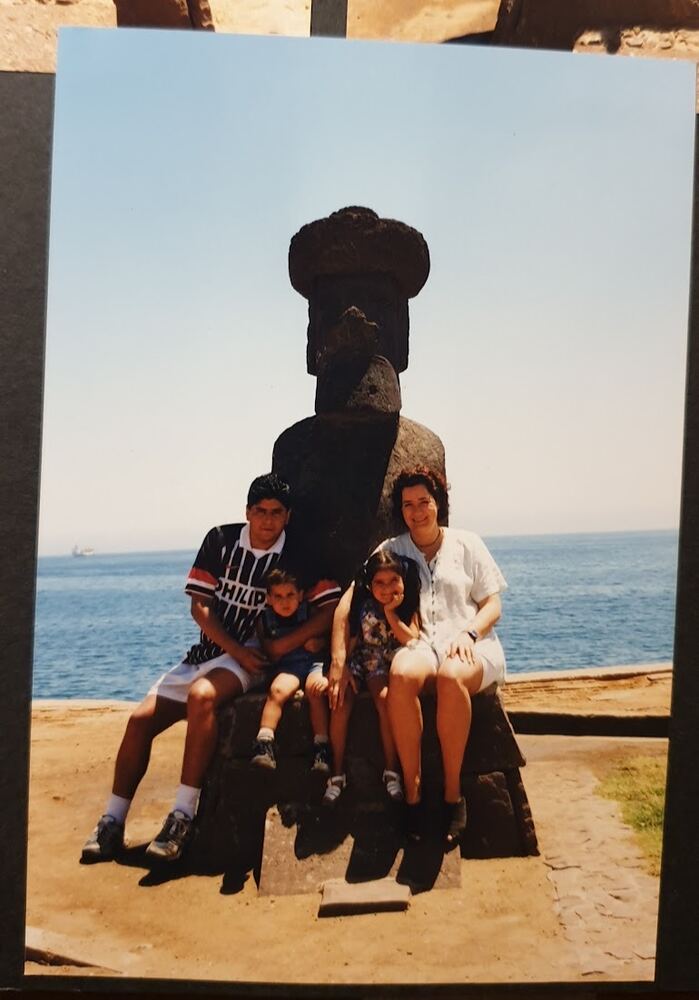
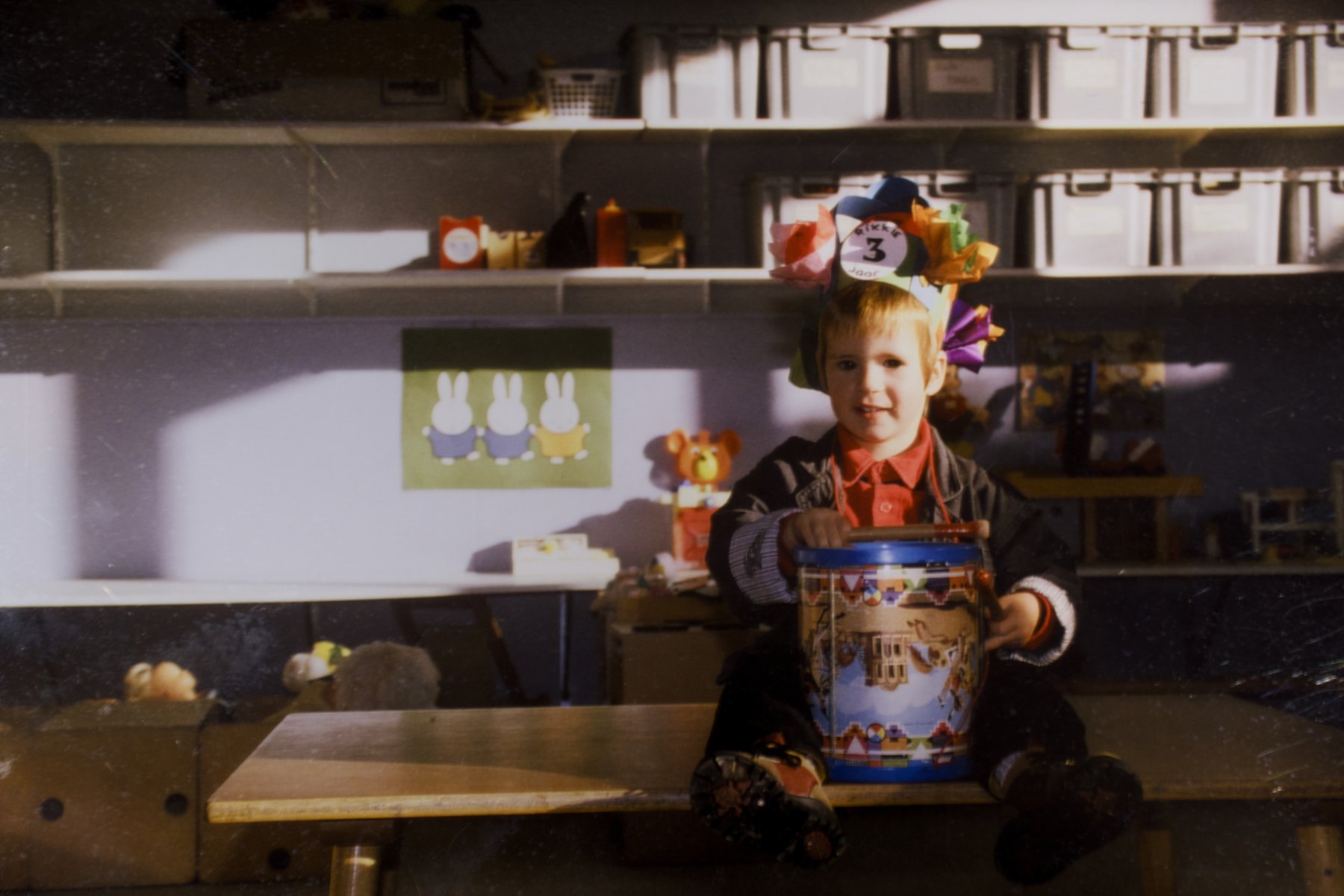
Both stories arrive at the same point: printing changes your relationship with a photograph. A digital file can disappear among thousands of other images. A print literally takes up space.
Analog photography is not only romantic
Film comes with plenty of frustrations too. Development takes time. Old cameras can stop unexpectedly. A shutter can fail, a mirror can get stuck and sometimes you only notice a mistake when the entire roll comes back. Because the feedback arrives later, it is also harder to remember exactly which settings were used for a particular frame.
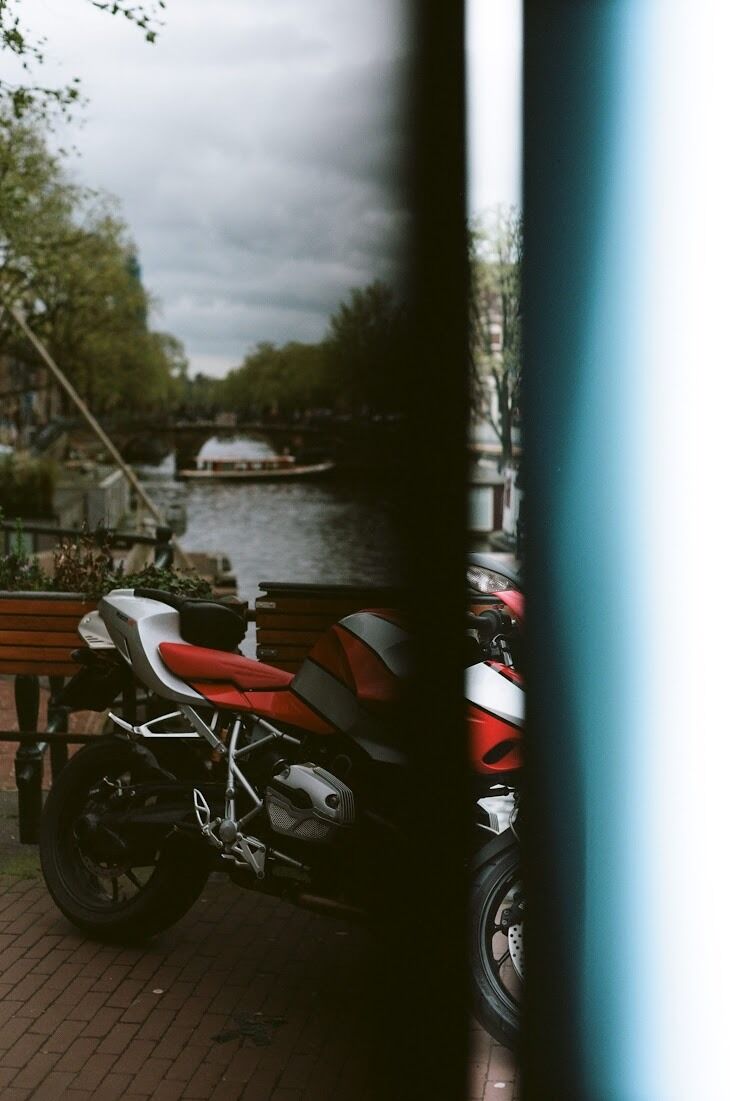
Miguel would therefore be cautious about photographing a one-off, unrepeatable moment — a wedding, for example — exclusively on film. Digital can provide a safety net. Rik recognises the problem in another way: if you really want to learn why an analog exposure works or fails, you need patience and a more deliberate way of recording what happened when you took the photograph.
At the same time, that old technology has a charm modern electronics do not easily replicate. Rik likes the fact that some cameras work completely mechanically. A device that has existed for decades and can still make photographs feels different from technology that is replaced after only a few years.
How do you get started with analog photography in Eindhoven?
Rik and Miguel ultimately arrive at the same advice: just start. You do not need an expensive collector’s camera. Older 35mm cameras can still be found on the second-hand market at relatively accessible prices, and a simple point-and-shoot removes much of the technical barrier.
From there, it can go in any direction. You can learn to develop black-and-white film yourself, work in a darkroom, experiment with unusual colour films, move into medium format or simply keep a small camera in your bag to document everyday life.
And even if you mainly shoot digital, Rik has one analog-inspired tip that stays with you: print your photographs. A screen is convenient, but actually holding an image in your hands makes it something different again.
Film is not dead — it makes you look differently
Explaining the appeal of film as nostalgia alone would sell both photographers short. For Rik, analog photography creates distance from screens and helps him look for quiet moments in busy urban environments. For Miguel, film has become both a personal archive and a playground of cameras, formats and film stocks.
Their approaches differ, and perhaps that is exactly the strength. Analog photography does not promise convenience. It gives you limitations, waiting, physical objects and the possibility that something unexpected will happen.
In a city so strongly associated with technology, slowing down with a mechanical camera can feel surprisingly refreshing.
Roll With Us — Analog Photography Meet-up
Saturday 26 September 2026 · 14:00–16:30 · Strijp-S
Want to do more than read about film and shoot a roll together? Bring your 35mm camera, medium-format camera, point-and-shoot or your very first roll of film and join us. Beginners are just as welcome as experienced film photographers. We will walk through Strijp-S, exchange tips and cameras and finish with coffee.
About Eindhoven Creative Community
Eindhoven Creative Community connects photographers, videographers and other visual makers from Eindhoven and the surrounding area. Through photowalks, events, collaborations and stories like this one, makers share their work, knowledge and experiences.