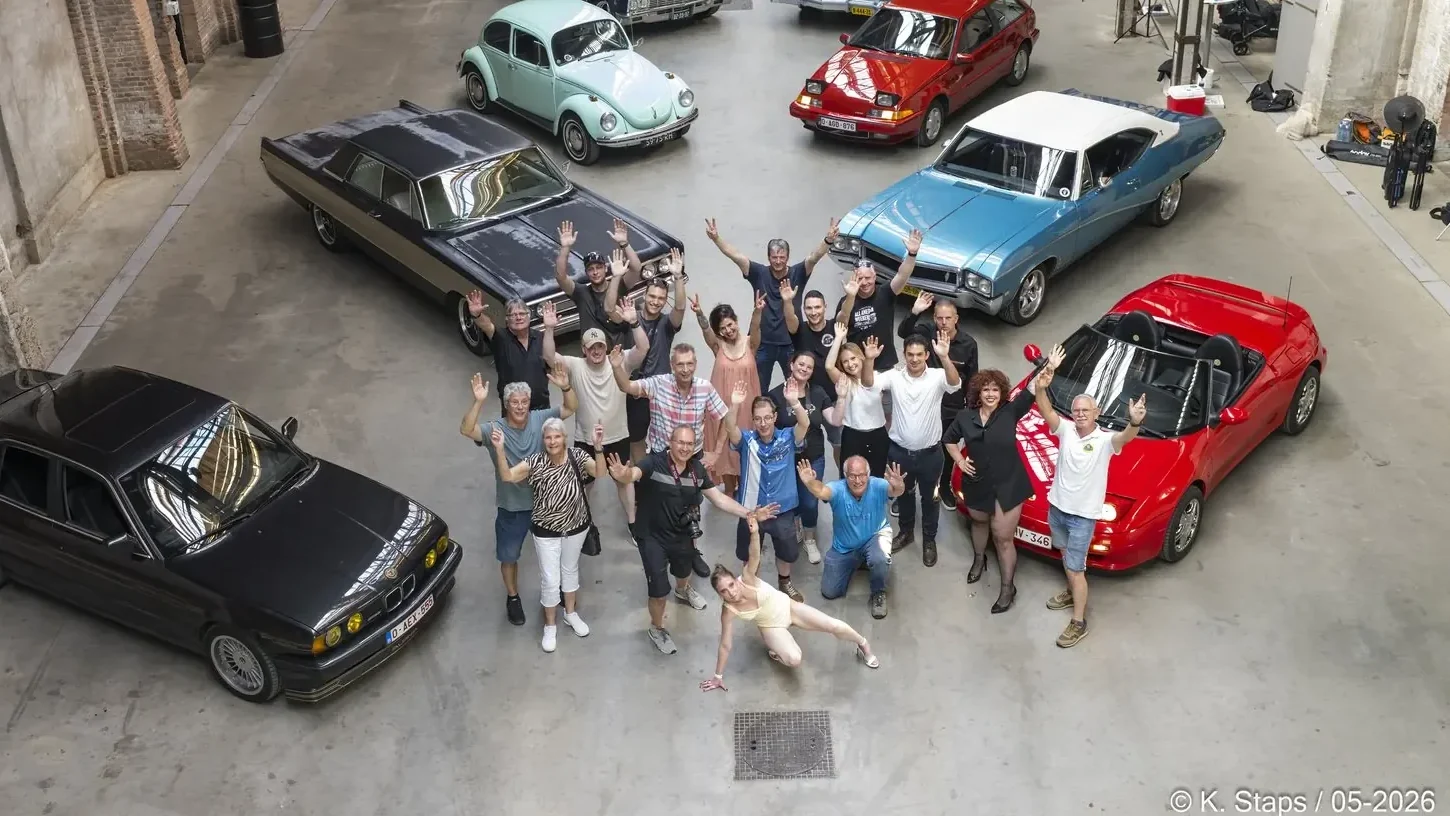
At Eindhoven Creative Community, we don’t want every activity to come from one central organisation. Quite the opposite: if there is something you would enjoy doing with other makers, it should feel easy enough to simply try it. You don’t need to be a professional event organiser. You don’t need a big budget either. What you do need is a clear idea, a few practical agreements and people who are up for joining in. For inspiration, take a look at the Eindhoven Creative Community events.
1. Don’t start with an event. Start with one good idea
“We should organise an event” immediately sounds like a big undertaking. A better starting point is: what would I genuinely enjoy doing together with other creators?
It can be very simple: an evening making portraits with one light, a camera walk around Strijp-S, shooting a short film, reviewing each other’s portfolios, doing an illustration challenge or trying a new creative technique with three people.
If you can explain in one sentence what people will do, who it is for and why it would be fun to join, you usually have enough to get started.
A useful mini-check before you start
- What are we going to do together? Make it concrete.
- Who is it for? Photographers, filmmakers, illustrators, everyone?
- What should people bring? A camera, laptop, materials or just themselves?
- How long will it take? For a small community activity, two to three hours is often more than enough.
- How many people do you really need? Sometimes four participants are better than forty.
2. Small does not mean unsuccessful
We quickly start measuring success in numbers. In a community, that is not always the best measure. If you organise a creative session and two other makers show up, it can still lead to new images, new ideas, a collaboration or simply a great afternoon.
That already has value. A small group with a real conversation can be more worthwhile than a large event where nobody really connects.
3. Choose a location that fits what you want to do
A location does not need to be impressive, but it should support the activity. For a photowalk, a clear meeting point may be all you need. For an editing evening, you need power, tables and Wi-Fi. For a shoot, it helps to know in advance how much space and light you have.
Think about the simple things too: is the place easy to reach, can people park their bikes, are you allowed to take photos there and does everyone know exactly where to go? The less practical friction there is, the more room you have to be creative.
4. Give one person responsibility for the basics
Organising something together is fun, but “we’ll all sort it out” can also mean nobody quite knows what still needs doing. Decide who the main point of contact is. That does not mean that person has to do everything.
Split up a few small tasks: one person arranges the location, someone keeps track of registrations and someone takes a few photos during the event for the community. For a small meetup, you rarely need more structure than that.
5. No-shows at a free event: allow for around 30%
Unfortunately, a registration does not guarantee that someone will actually turn up. Especially with free activities, the threshold for changing plans at the last minute is low.
An analysis by PheedLoop of more than 1,070 live events found a median no-show rate of around 28% for free events, compared with around 17% for paid events. For small events with 10 to 49 participants, the median no-show rate was around 32%. So for a small free ECC event, roughly 30% is a realistic rule of thumb, although your own turnout may of course be higher or lower.
My advice: ask for a €5 commitment to Stichting ALS Nederland
If the event itself is free, I recommend asking participants to make a small donation of, for example, €5 to Stichting ALS Nederland. Not because €5 needs to cover the cost of the event, but because it asks someone to take a deliberate action and creates a little more commitment to their registration.
The available event data clearly shows that free events have more no-shows than paid events. Those figures do not prove that exactly €5 will have the same effect at every ECC event, but the principle makes sense: a small commitment makes a registration feel less casual.
Ideally, let people donate directly through Stichting ALS Nederland or through your own ALS fundraising page. That way it is also clear where the money goes.
6. When should you communicate about your event?
You don’t need to bombard people with messages for weeks. But it helps enormously if the event does not disappear from view between registration and the day itself. For a small ECC event, I would use this simple schedule:
7. Give people a reason to talk to each other
Don’t just put people in the same room and hope “networking” happens by itself. Give them something to do together. A mini-assignment, a challenge in pairs, reviewing each other’s work, taking one portrait of each other or a short introduction question can be enough.
For creative makers, conversations often start much more naturally when they do not have to begin with “so, what do you do?”. Let the creative process be the icebreaker.
8. On the day: keep it human
Make sure someone arrives on time, welcomes new people and explains in five minutes what is going to happen. After that, let the activity breathe. You do not need to schedule every hour.
For shoots and photography events, it is also smart to agree briefly on image use: who can share what, does everyone want to be tagged, and is anyone uncomfortable appearing recognisably online? Five minutes of clarity beforehand can prevent awkwardness afterwards.
9. Share what came out of the event
An event does not end when everyone goes home. Ask participants to share a few results. It does not need to become a lengthy report. Three strong images, a short reel or one collaborative post can already show what is happening within the community.
That helps the event itself, but also shows other members that they can simply join next time — or organise something themselves.
It does not have to be perfect. Just start.
A good ECC event does not need a stage, sponsor, full room or months of preparation. It can start with one idea and two people who both think: that sounds fun to do together.
If it grows afterwards, great. If it stays small but everyone goes home with new inspiration, new work or a new contact, it was successful too.
What you give attention to, grows. The same applies to an initiative within ECC. Share your idea, invite people personally and give the first edition room to start small. An activity with two makers can be exactly the beginning of something that grows naturally over time.
Would you like advice or help organising your idea? Email hello@creativecommunity.nl or bring it up at the next Friday afternoon get-together. We’ll be happy to think along with you about how to make it happen in a simple, accessible way.
Sources and further reading
- PheedLoop Event Data Lab Report #05 — no-show benchmark based on 1,070+ live events; around 28% median for free events and around 17% for paid events.
- Eventbrite Help Center — standard reminder for in-person events 48 hours before the start.
- Eventbrite: event reminder emails — recommends a reminder around a week before an in-person event and another one to two days beforehand.
- Stichting ALS Nederland — direct donations to ALS research and support.