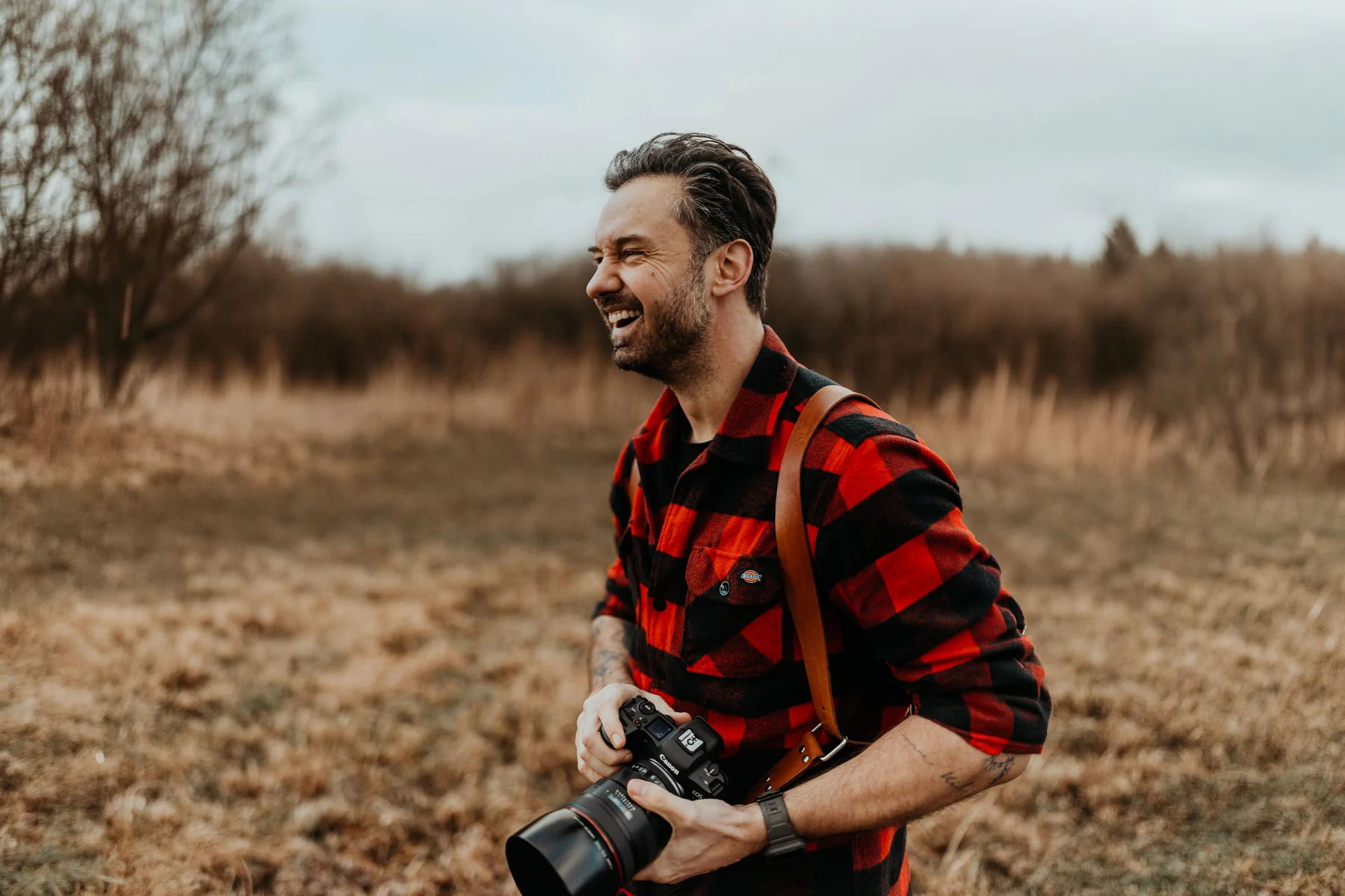
A conversation with yourself under the stars
Photography was not the result of a carefully mapped-out career plan. In 2008 Roy worked in technology and IT, but to him it felt as though he had mainly drifted into a direction. That changed during a trip. One night he could not sleep, walked to the coast and sat on a tree trunk beneath the stars. There he asked himself an unusual question: suppose I am eighty and looking back on my life, what would that older version of me want me to do right now?
The answer was surprisingly clear: something creative. The next morning he told his friends about his decision. Their response was simple: you always have a camera with you, so why not start photographing? Roy did own a camera at the time, but had hardly any technical knowledge. Even so, photography was the first activity that did not make him think: nice, what’s next? He wanted more.
For Roy, that need for creativity was also connected to communication. Where words did not always come naturally, images turned out to be a way of expressing something. Photography therefore became more than making a beautiful picture.
The camera as a tool for emotion
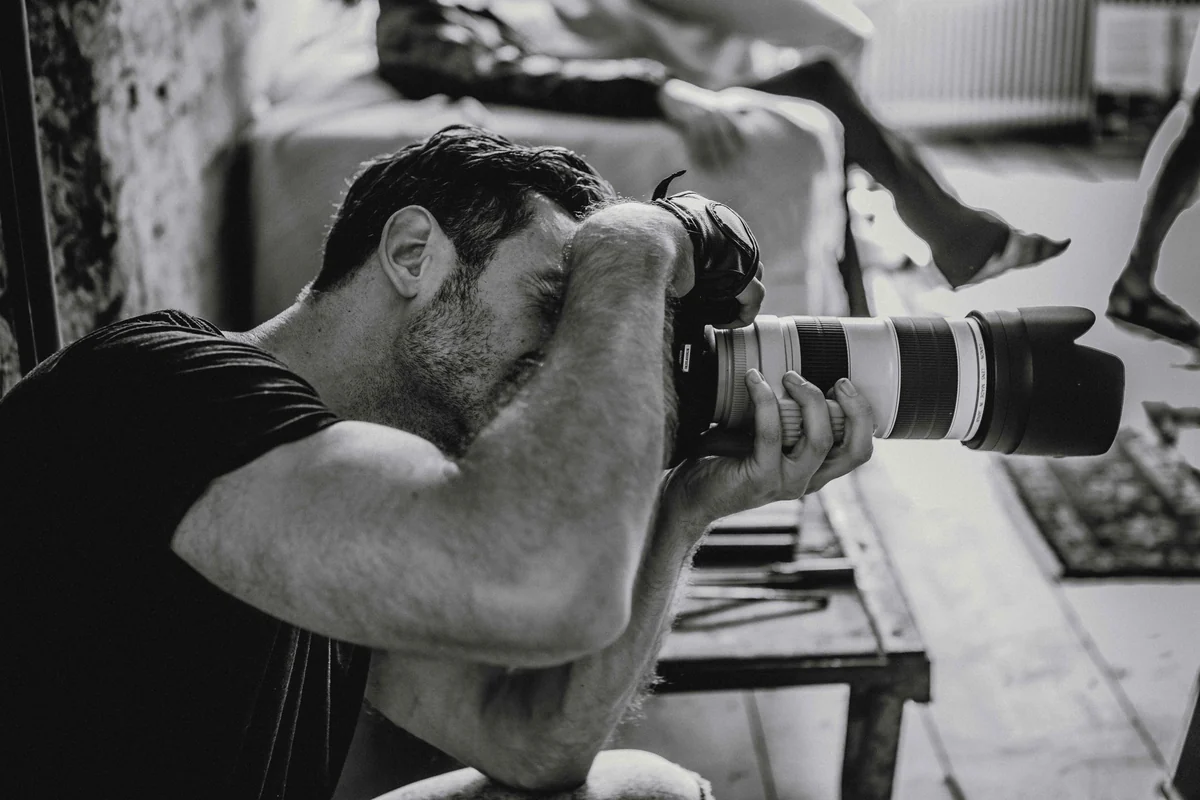
Roy enrolled at the Fotoacademie while terms such as ISO, shutter speed and aperture were still largely new to him. What he did bring was technical aptitude and a strong motivation to understand the camera completely. Four years later he could operate almost any digital or analogue camera without constantly having to think consciously about the settings. That was exactly his goal: technique should no longer be an obstacle between what he saw and what he wanted to tell.
A camera is therefore not simply a device that records something for Roy, but a connection between emotion and image. Once operating it becomes intuitive, there is room to react to what is happening in front of the camera.
You can still hear that idea when Roy talks about other photographers. In his view, so much attention can go to equipment, lenses and settings that the actual act of looking gets buried. His advice is almost the opposite: take a simple camera, put a fixed lens on it and go photograph. Learning technique matters, but afterwards you also have to dare to forget it.
“For me, emotion comes before composition.”
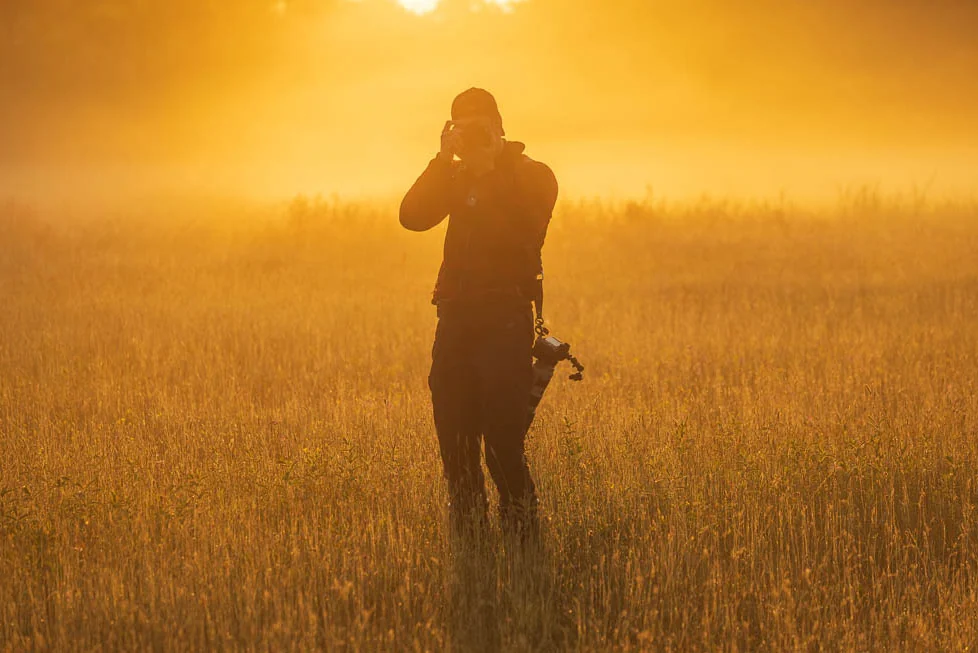
A failed fashion shoot that turned out exactly right
After his education, Roy worked in fashion among other areas. It was there that an experience emerged which would further shape the way he photographs.
Several people failed to show up for a planned fashion shoot. No make-up artist, no access to the location as intended. In the end, Roy, a stylist and two models were standing outside with a plan that had largely become useless. They decided to shoot anyway: minimal make-up, one flash, improvisation and above all seeing what would happen.
The images were later submitted and published in Vogue. For Roy, that shoot confirmed something he had previously learned mainly in technical terms: circumstances do not have to be perfect to make good work. By then he understood how light and his camera worked; from that point onwards, technique could move further into the background and feeling could move forward.
At the same time, the fashion world brought him something else: doubt about what he wanted to contribute to it. He saw how young models could start and how strongly appearance and beauty ideals defined that world. Smoothing people into perfection still does not appeal to him.
Removing a spot? Fine. But changing someone into a version that no longer feels human is where he draws the line.
From fashion to weddings
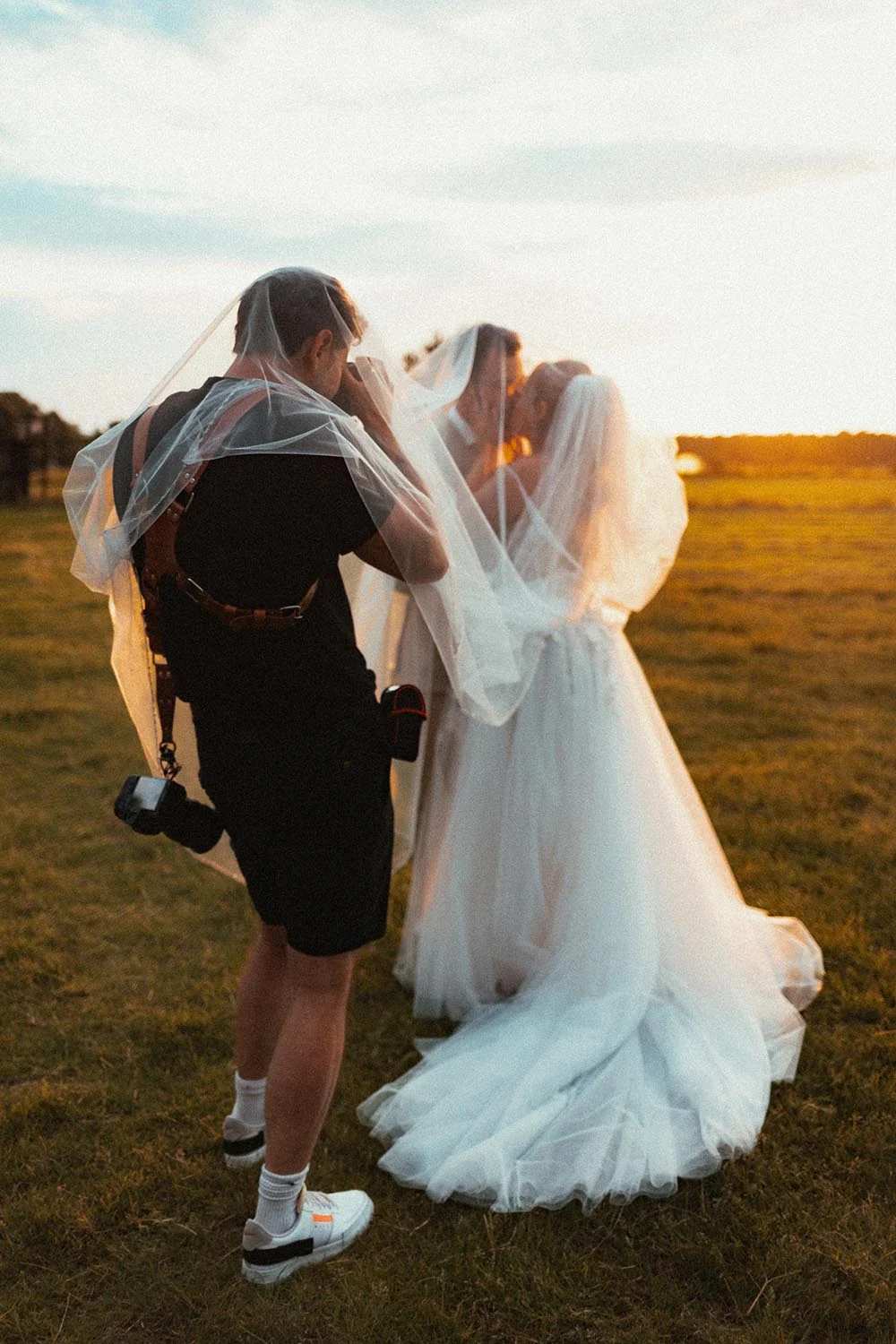
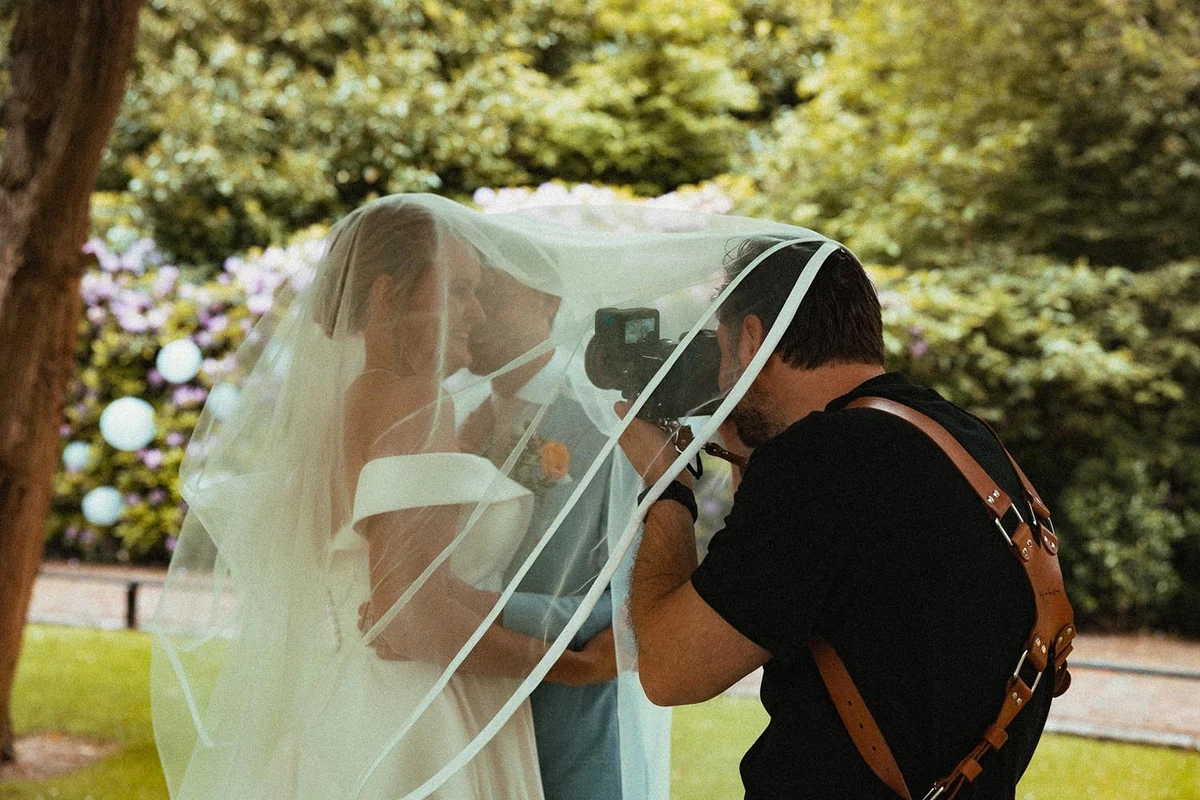
The move into wedding photography happened almost by accident. A friend was getting married and asked Roy to take photographs. Those images were then seen by another couple. At that point Roy’s website mainly showed fashion photography, but they wanted him to photograph their wedding precisely because of that. His first response was roughly: I do not even do that. He did it anyway.
There he discovered that he could use the visual experience from fashion for real, personal stories too. In his view, a wedding did not automatically need to be photographed in a sweet or traditional way. He could bring the same attention to light, contrast and style, but now with a much more direct meaning for the people in the photographs.
That gave him something he had started to miss in fashion: the feeling that an image genuinely preserves something for someone.
Photography therefore became less of a display of what Roy himself could do technically or creatively, and more a way of holding on to something that belongs to someone else.
“I want to leave something in the world that genuinely makes people happy.”
Photographing without posing
Ask Roy what exactly makes a typical Roy van der Wens photograph and you will not get a list of rules. People often recognise his images, he says, more easily than he himself can explain why.
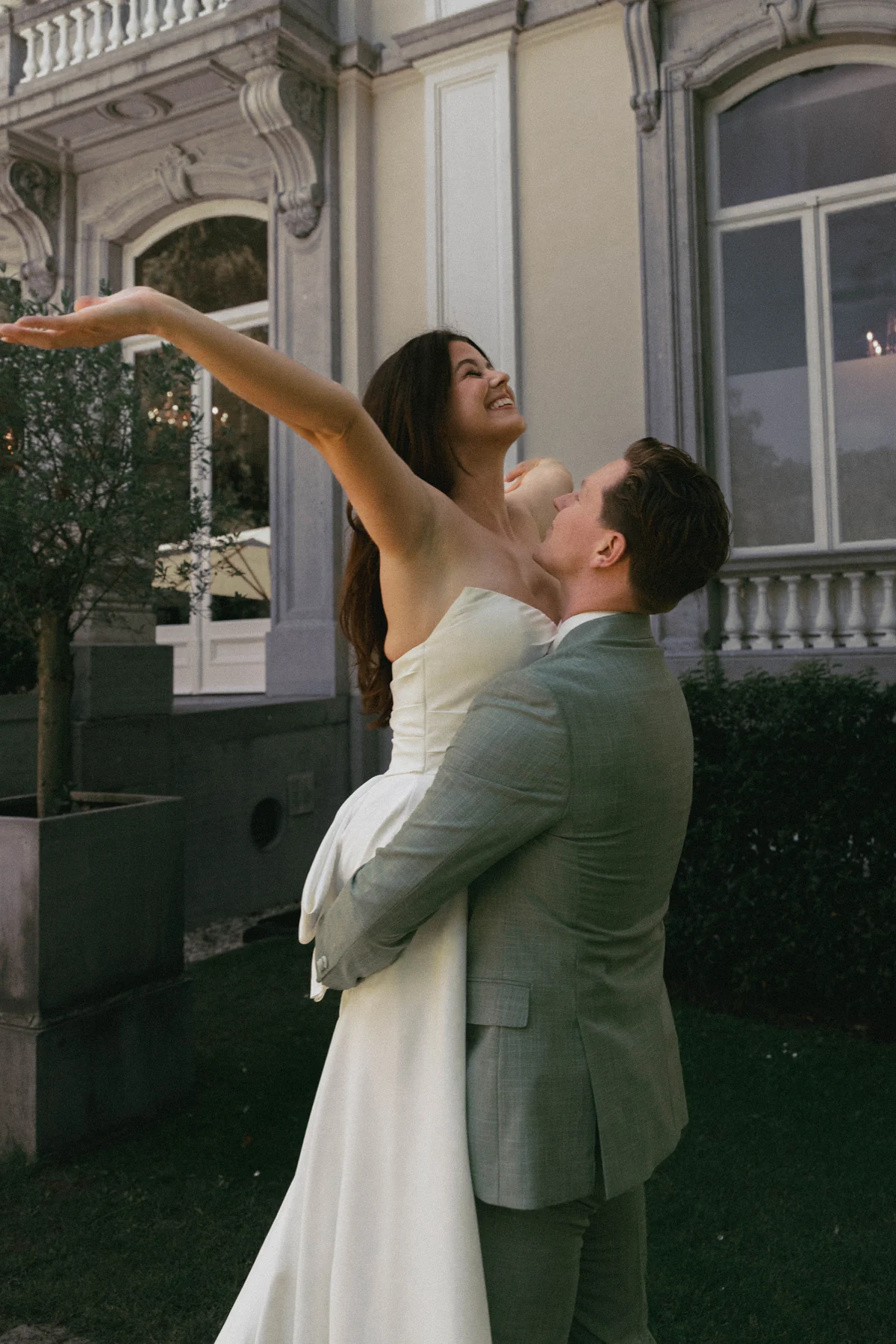
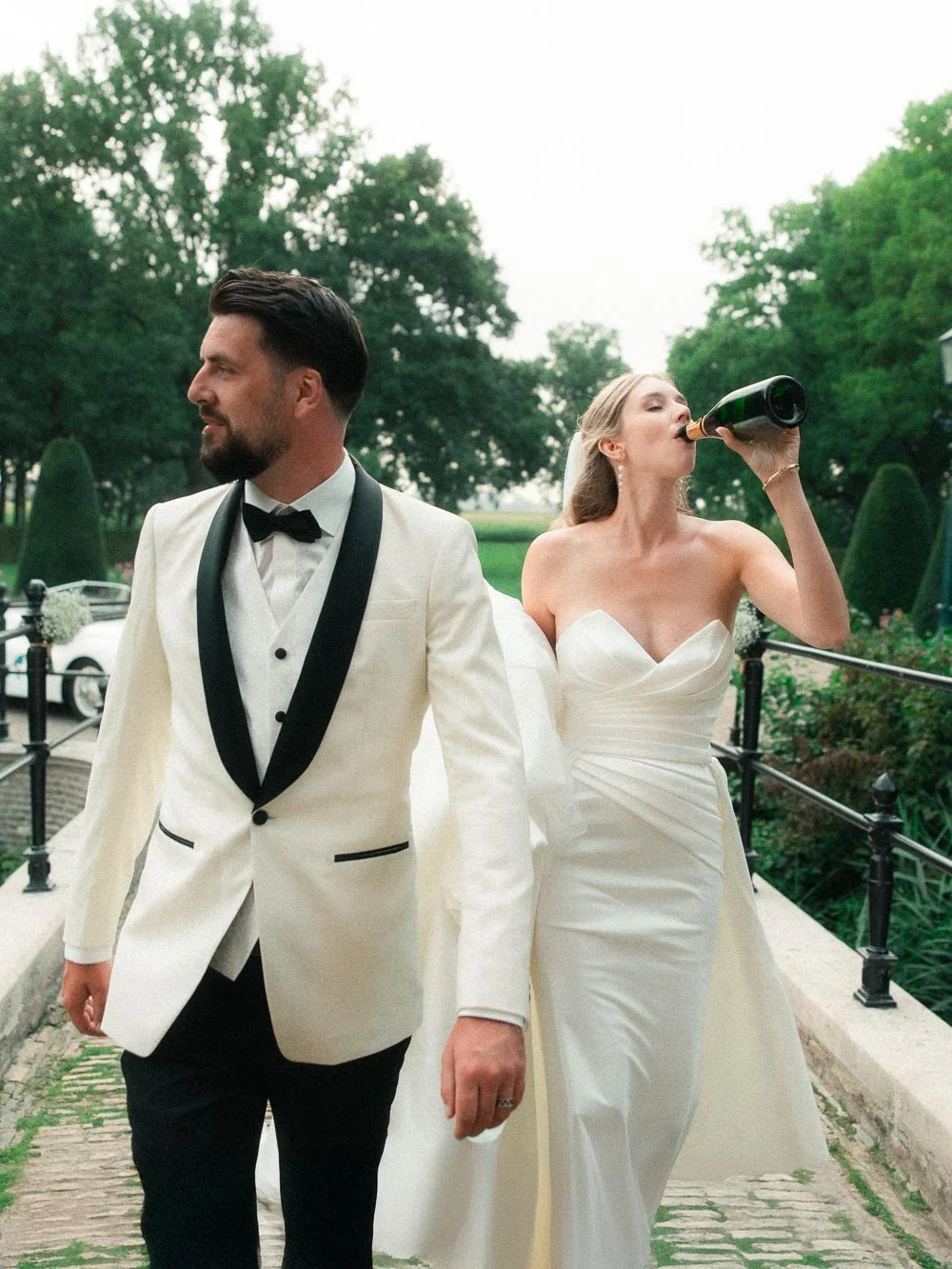
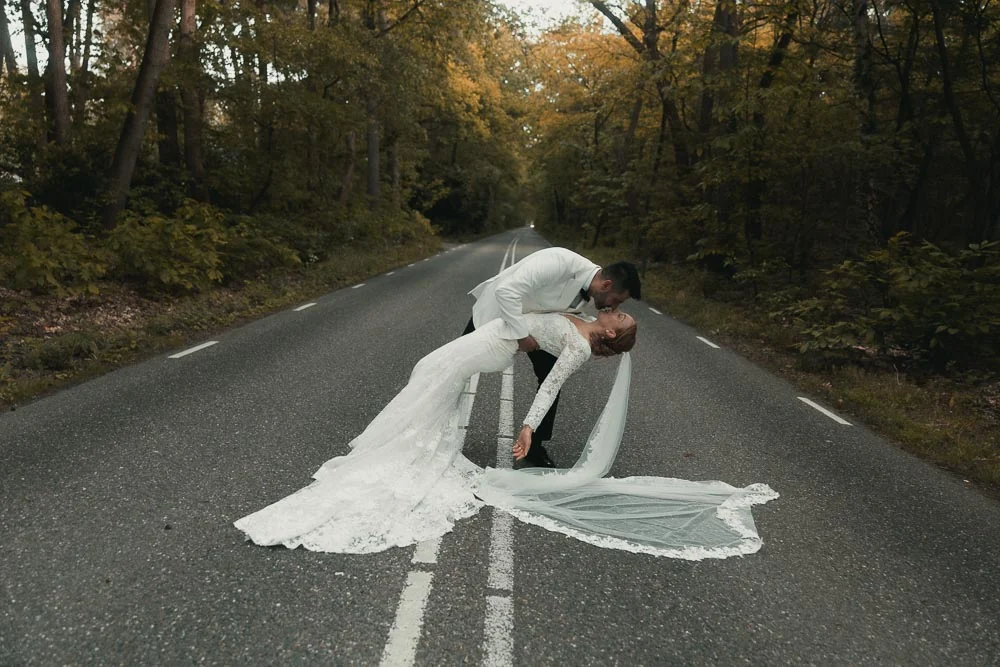
There are recurring elements. Deep contrast. Relatively desaturated colours. A preference for black and white. And above all, people who do not look as though they are waiting for the photographer to finally press the button.
Roy calls it photographing without posing. That does not mean there is no direction; the difference lies in how you guide someone. Asking somebody to laugh creates a different image from doing something that genuinely makes them laugh. In the first case you ask for a facial expression, in the second the emotion appears by itself. A small difference in words, but a big difference in the photograph.
With people who say they are not photogenic, Roy therefore does not begin immediately with a formal shoot. First, walk a little, talk and get used to the situation. At a wedding he prefers to schedule such a moment later in the day, when the tension has eased and people already know him.
He also tries to keep his own presence small. Compact equipment, clothing that fits in with the guests and no attitude as though a full production crew has entered the room.
He wants to be able to stand close to a moment without making the moment about him.
Photography freezes, video moves
Alongside photography, film has been part of Roy’s work for a long time. To him, the two media can do something fundamentally different. A photograph extracts a single fraction from reality: the photographer determines the frame, lens, colour and moment. In that sense, Roy says, photography is never fully objective. An image shows something, but at the same time leaves an enormous amount out.
Video provides more context because movement, sound and time are added. Yet a still image has something that video, in his view, finds harder to match: it can literally freeze one moment.
A wedding dress being put on, a glance in the mirror or tears slowly forming can tell a complete story in film. But that one photograph may stand on a cabinet years later and instantly return you to the very same second.
That is why Roy combines both.
Not by frantically deciding during a wedding whether something should become a photo or a video. After more than a thousand weddings, he often knows in advance what is going to happen. He prepares, observes and decides where photography or film can tell the moment most powerfully.
Room one or room two?
Perhaps Roy’s view of photography becomes clearest when he imagines a house on fire. In one room is your portfolio: the most beautiful photographs you have ever made, your awards, projects and everything you use to impress people online. In the other room are the photographs of the people you love.
You can save only one pile. Which one do you take? Almost nobody chooses the portfolio.
For Roy, that reveals an important difference between images that mainly want to be admired and images that ultimately gain meaning.
Social media, he says, is full of what he calls room one: aesthetics, achievements and images asking for attention. But ultimately, people are looking for room two: memories, relationships and moments that only become more valuable with time.
That does not mean form is unimportant. Quite the opposite. Roy distinguishes between content and form. The exceptional photographs, in his view, are precisely the ones in which the two come together: aesthetically strong and meaningful in what they contain.
But on an assignment, one principle remains: it is the couple’s wedding, not the photographer’s portfolio shoot.
Fries, photography and sharing knowledge
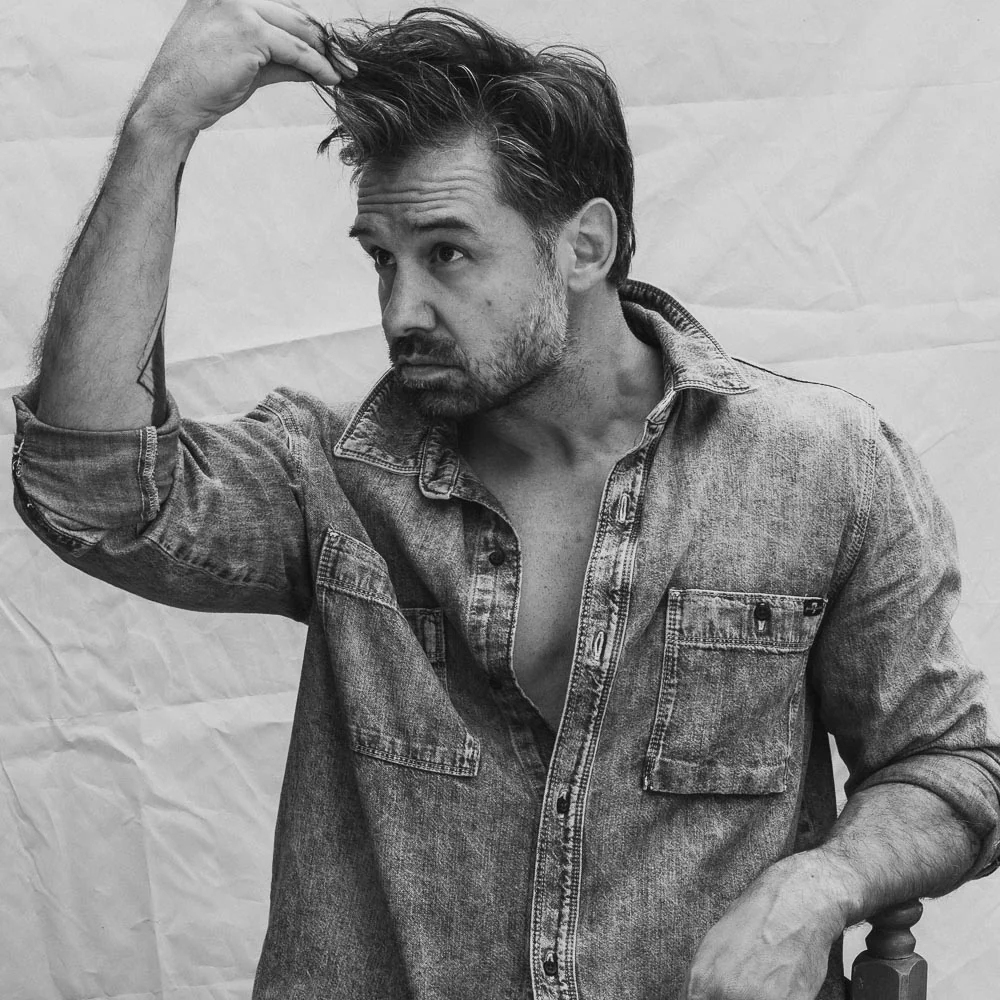
These days Roy increasingly shares that vision with other photographers too. Through workshops and masterclasses, talks and online videos, he tries to make photography less complicated and above all practical. Fries appear surprisingly often along the way. What started as a joke became part of his online style: at the end of an in-depth video, a question about fries, snacks or sauce may suddenly appear. People respond, debate it and find it easier to start talking to one another.
It is light-hearted, but there is a serious idea behind it: photography does not always need to be explained in a heavy, technical or distant way.
Roy wants to share knowledge in a way that suits him. Dutch, Brabant-flavoured, sometimes a little provocative, and above all without pretending photography is only accessible to people who know every camera specification by heart.
Eindhoven as a creative home base
Roy was not born in Eindhoven, but the city has become his home. What appeals to him is precisely Eindhoven’s combination: a city that has never entirely lost its Brabant character, while technology, ASML, international residents, design and creativity run straight through it. It is that mixture that gives Eindhoven layers for him.
Creativity is not decoration in that picture. Art, photography, design and culture help determine why people feel drawn to a city and why a place becomes more than buildings and infrastructure.
According to Roy, photographers do not automatically have to run to Eindhoven’s best-known architecture either. A location should support an image, not dominate it.
One of his own underrated places lies just outside the built-up city: the Eindhovense Zegge, a nature area between Eindhoven and Nuenen that was also a source of inspiration for Van Gogh. It is an area where landscape, light and nature offer plenty of possibilities without the location demanding all the attention. Roy brings that same curiosity about how other people see Eindhoven to his role as a jury member of the Eindhoven Photography Challenge.
Show Roy your Eindhoven
Roy van der Wens is one of the jury members of the Eindhoven Photography Challenge. Submit one photograph that shows what Eindhoven means to you, from people, architecture and street life to nature, light or a small detail others might miss.
Join the Photography ChallengeEvery press of the shutter changes the photographer too
After almost twenty years, Roy does not necessarily need to discover another photographic technique. His next challenge lies elsewhere: he is thinking about an interactive theatre tour bringing together photography, stories from his career, humour and his own personal development. Not as a technical masterclass, but as a way to encourage people to follow their own creativity.
That idea actually fits exactly where his story once began.
A man who, during a trip beneath a starry sky, decided he did not want to keep doing whatever happened to land on his path. A camera then became the tool through which he learned not only to look at other people, but at himself too.
As Roy summarises it during the conversation: every time he presses the shutter, it is not only the photograph that develops.
The photographer changes too.
See more of Roy van der Wens
Want to see more of Roy’s photography, films and workshops? His website contains his portfolio and his offering for photographers. You can also follow him on Instagram. Want to discover more photography from Eindhoven? Read the story of Jan Timmer, browse all stories from makers in Eindhoven or join Eindhoven Creative Community.