A camera instead of wages
Cas was about fifteen when photography unexpectedly entered his life. At a part-time job he was given a choice: get paid or take home a camera the owner had lying around. He chose the camera. Not necessarily because he already knew he wanted to become a photographer, but because he wanted to understand how the device worked.
It did not take long before real assignments followed. Cas experimented with light painting, gave a workshop on it to children and then rolled into event photography. At sixteen he joined a local DJ duo in Limburg with his camera and gained access to places he otherwise would never have entered. At first, photography was mainly a way of being right in the middle of things.
Later, study and work took centre stage for a while, but the camera never disappeared completely. He explored different directions, from product photography to fashion. Yet Cas kept returning to people. Not only because a face is interesting, but because he is curious about what drives someone and how much of that can be visible in a single image.
When a perfect photograph is no longer enough
In his early years Cas learned photography the way many makers do: shutter speed, aperture, composition rules, a straight horizon and the subject neatly placed on a third. That foundation is now so deeply ingrained that he barely thinks about it consciously. Precisely because of that, he was able to let go of the rules gradually.
For him, a technically perfect photograph is not automatically the best photograph. An image may have a little motion blur or be just slightly soft on the eye if that is where the right moment lives. What once might have felt like a mistake can now be exactly why an image works.
“What has become much more important to me is capturing the right moment.”
That shift became particularly clear when Cas worked in fashion. After a shoot for a clothing brand, a model called him: she knew she had been on set, but barely recognised herself in the final result. Cas had not done the retouching, but it made him think. If every freckle, every bit of skin texture and every distinctive feature disappears, are you still photographing a person or mainly a product?
High fashion meets street photography
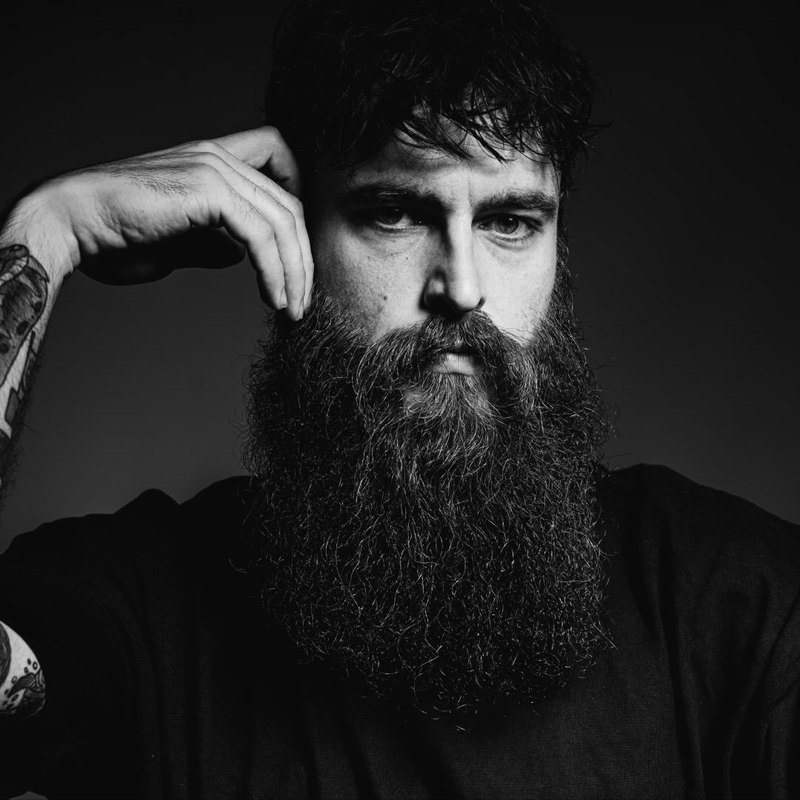
His current visual language draws strength from two worlds that seem far apart at first glance. From fashion Cas takes hard light, high contrast and clean form. From classic street photography he takes tension in the composition, unexpected foregrounds and the feeling that a moment is simply unfolding in front of you.
For his portraits, that often means a simple setup: hard light from one side, few distractions and an image that feels styled without forcing the person into a role. In documentary photography there is less control, but the same question remains: does it feel as if you, the viewer, are briefly there?
“With my portraits, I want you to see someone and think: I know this person.”
A portrait starts before the first click
Someone who comes to Cas for a portrait is not placed in front of the camera the moment they arrive. A first session can easily last two or three hours, while the actual photography sometimes takes only ten to twenty minutes. The rest of the time is spent having coffee, talking and discovering who is sitting opposite him.
The standard question “what do you do for work?” is not the most important one. Cas wants to know what excites someone, what they are proud of and which subject instantly changes something in their expression. During the shoot he can return to those subjects. The classic car someone can talk about for hours. A child they are proud of. A project they have worked on for years. According to Cas, those topics create a different expression than “look here and smile”.
The atmosphere often changes as soon as someone sees the first photograph. Cas shoots with a black-and-white preview, so the image on the camera screen already comes close to his final style. People suddenly see themselves differently from how they do in the mirror or in a quick phone snapshot. That is often the moment the tension begins to disappear.
Everyone can look good in a photograph
Cas regularly hears people say, “I never look good in photos.” He believes that often comes from an unrealistic comparison. People see professional models, campaigns and perfectly directed images and expect to achieve the same thing within twenty minutes without any experience. Meanwhile, most of the photographs they know of themselves are quick phone snapshots.
Cas prefers to turn that thought around. Everyone can look good in a photograph, but not everyone automatically feels comfortable in front of a camera. That is why relaxation matters more than an endless list of poses. He often photographs portraits seated and tries to force as little as possible. A shoulder that is not perfectly straight or a head that naturally tilts slightly to one side does not need to be corrected. It may simply be part of that person.
One light, a white background and nothing else
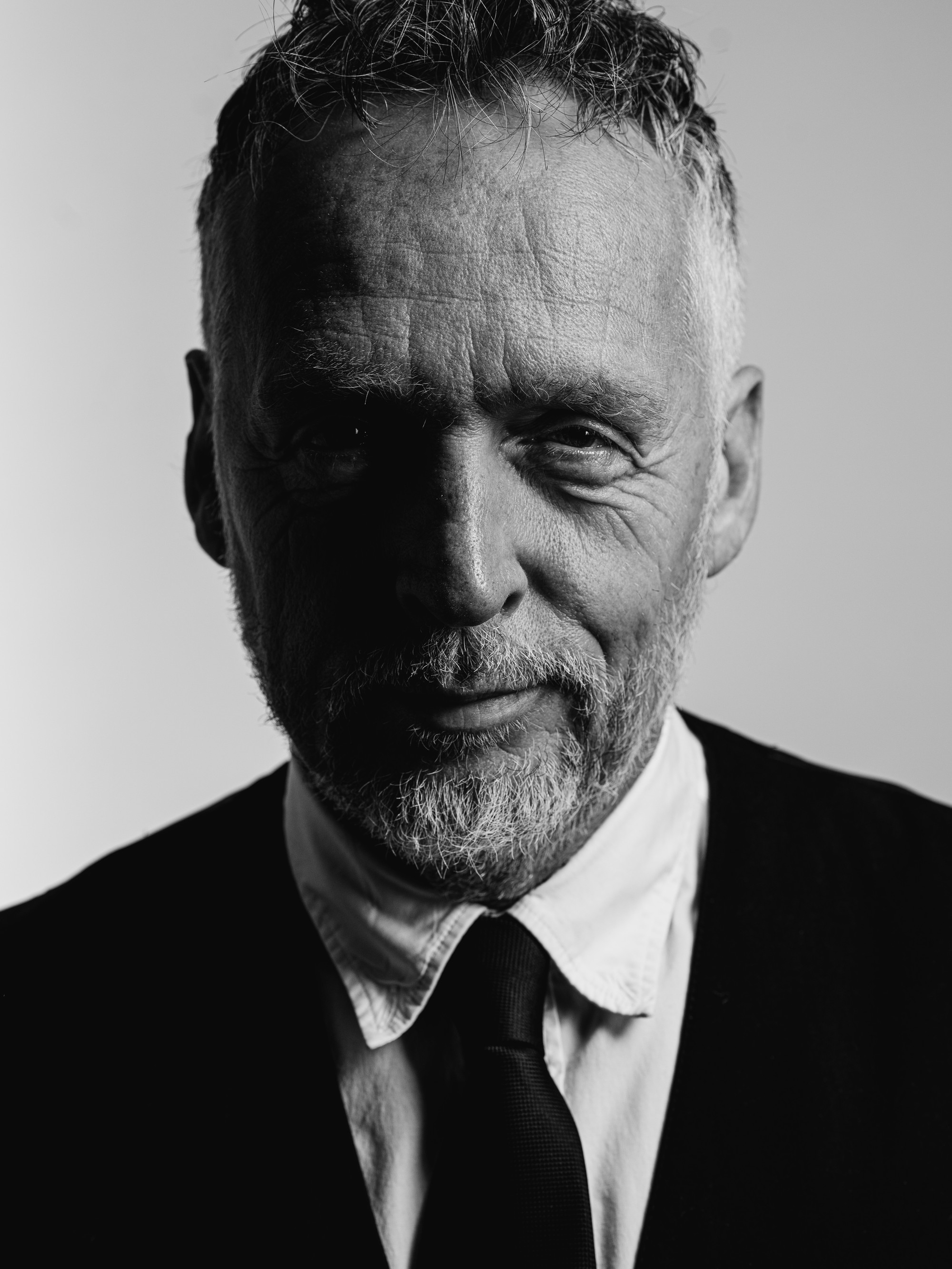
Technically, Cas deliberately chooses simplicity too. A white background, one light and one person are often enough. That limitation forces him to find something distinctive in posture, expression, light and timing. A spectacular location can make a photograph interesting almost automatically; in a bare studio the image has to come from the person.
That fits his broader view of equipment. Modern cameras can do more and more, but for his work he uses only a small part of those possibilities. New technology is welcome when it genuinely adds something, not because a photographer should feel that newer automatically means better.
Black and white leaves more open
Black and white has become a constant in Cas’s work. Not only because he likes the look, but mainly because colour adds information to many of his images that he does not need. Whether someone is wearing a blue or a red shirt changes little about the portrait he wants to make.
He compares it to his grandfather’s old photo albums. With black-and-white images in particular, something remains open to the imagination. What did that place really look like? What colour was the environment? What was happening just outside the frame? By leaving information out, a viewer may spend longer with the image.
“For my work, colour can be an unnecessary distraction. Black and white leaves more room for your own interpretation.”
Not photoshopping someone ten years younger
Cas applies the same restraint in post-production. A spot that will be gone tomorrow? That can be removed. Breadcrumbs on a shirt? No problem either. But a scar, wrinkle or other characteristic that is part of someone is something he would rather leave in place.
Once, he photographed someone who had been insecure for years about a visible facial scar. Cas did not light it so that it disappeared; instead, he made sure it remained part of the portrait. For him, that is the boundary between careful finishing and changing someone.
“What will be gone in a week, I remove. The rest is part of what makes you who you are.”
Why men are allowed to have a portrait made too
In recent years Cas has photographed relatively many men. Not because of one grand plan, but because he noticed how much higher the threshold often is. Where someone else might respond to the idea of a photo shoot with “exciting, but fun”, men surprisingly often first ask: why?
A portrait then quickly becomes something functional: a LinkedIn photo, a business profile or something required for work. At the same time, Cas sees that men are also searching for how they want to present themselves. Tough, strong and controlled are still expectations that can play a role. Precisely for that reason, he finds it interesting to make more room in a portrait for character than for such a standard role.
The beauty of everyday life
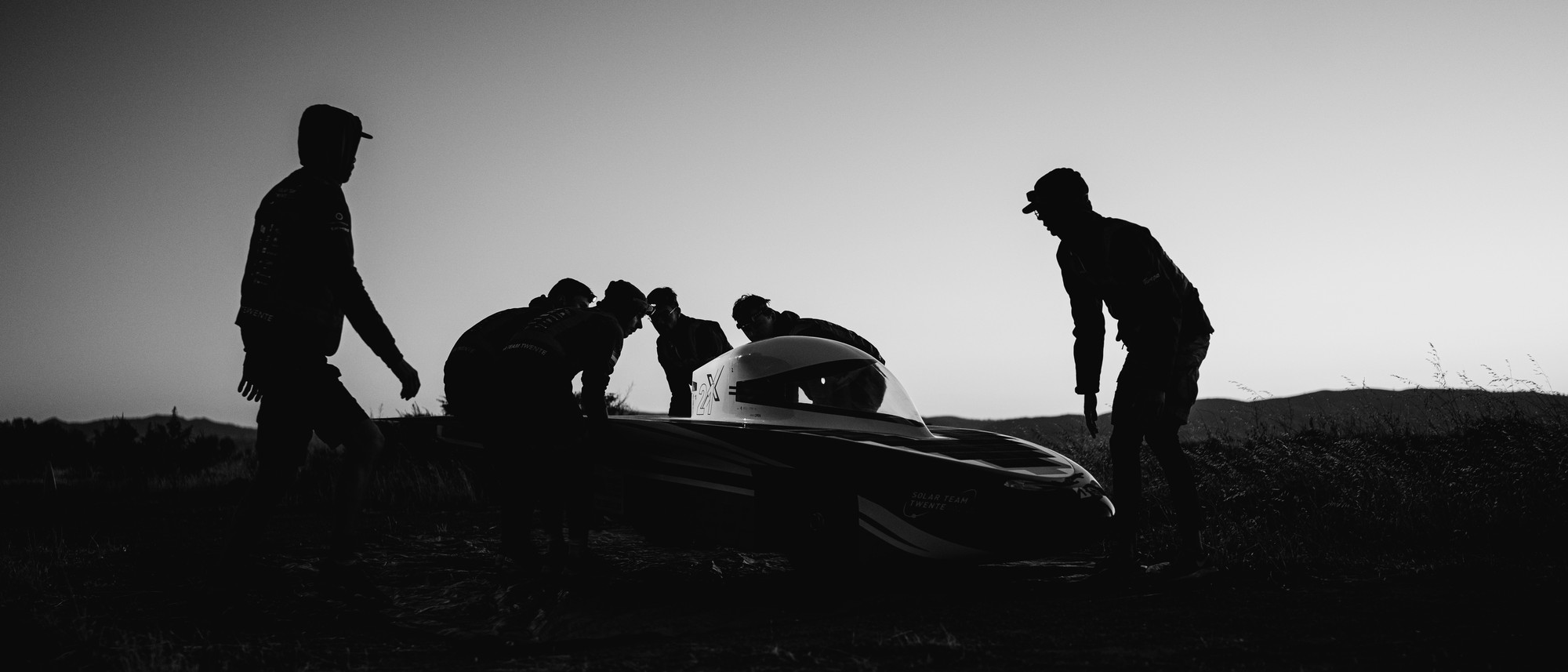
Alongside portraits, Cas makes personal documentaries in which he follows people over a longer period. He is not looking for exceptional events, but for the everyday life that barely feels remarkable to the person living it.
A market trader in Asia may seem exotic and visually interesting to a Dutch photographer, while for the person in the image the same situation is simply a working day. Cas turns that logic around: why should someone drinking coffee at home, mowing the lawn or frying an egg be any less interesting? Years later, precisely those images can acquire an unexpected amount of meaning.
During such a documentary he tries to be present and absent at the same time. He talks to someone, walks along with them and photographs in between without interrupting every action. The less someone notices that a photograph is being taken, the greater the chance of an image that does not feel performed.
A photograph of someone in the middle of their passion
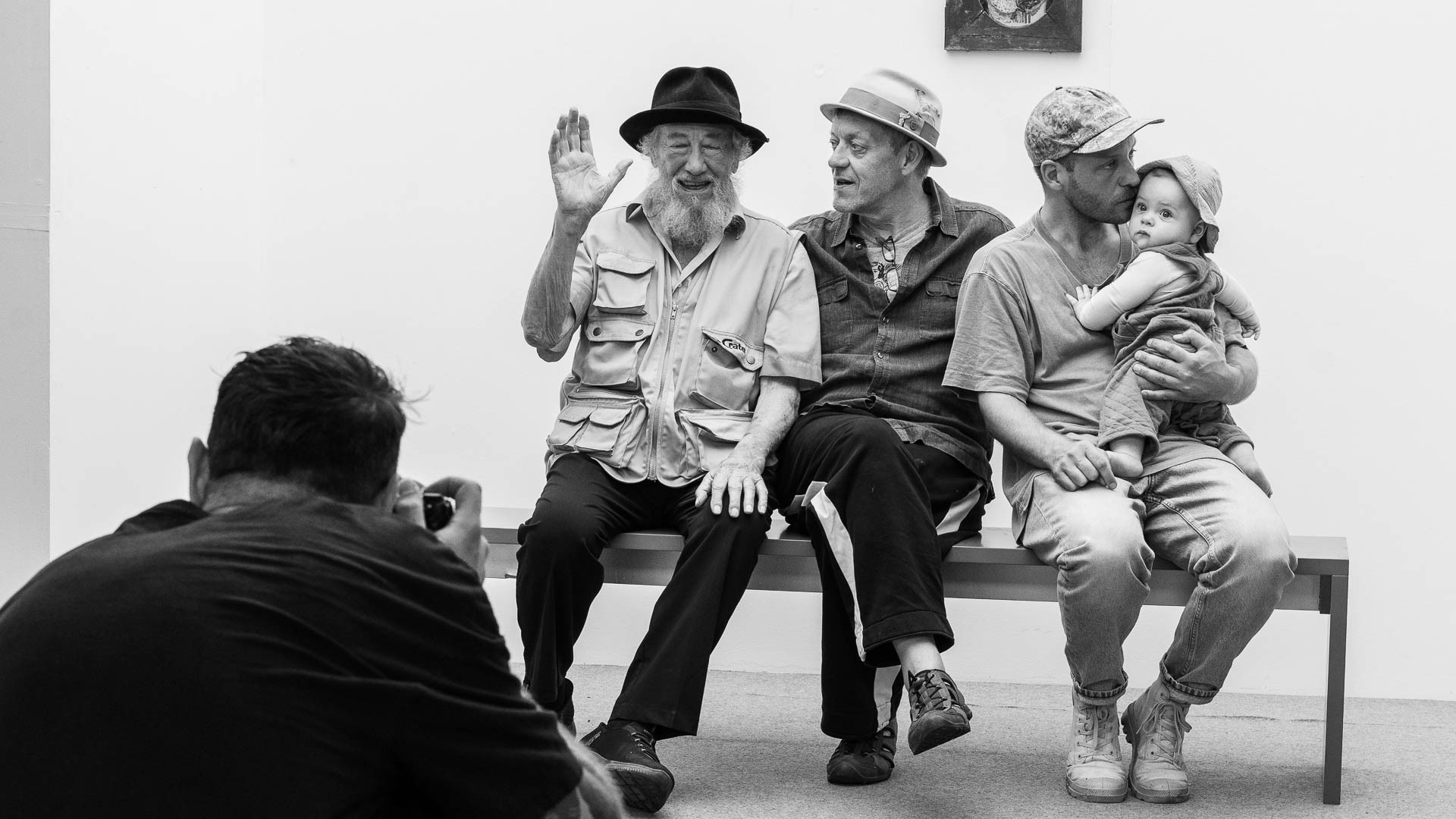
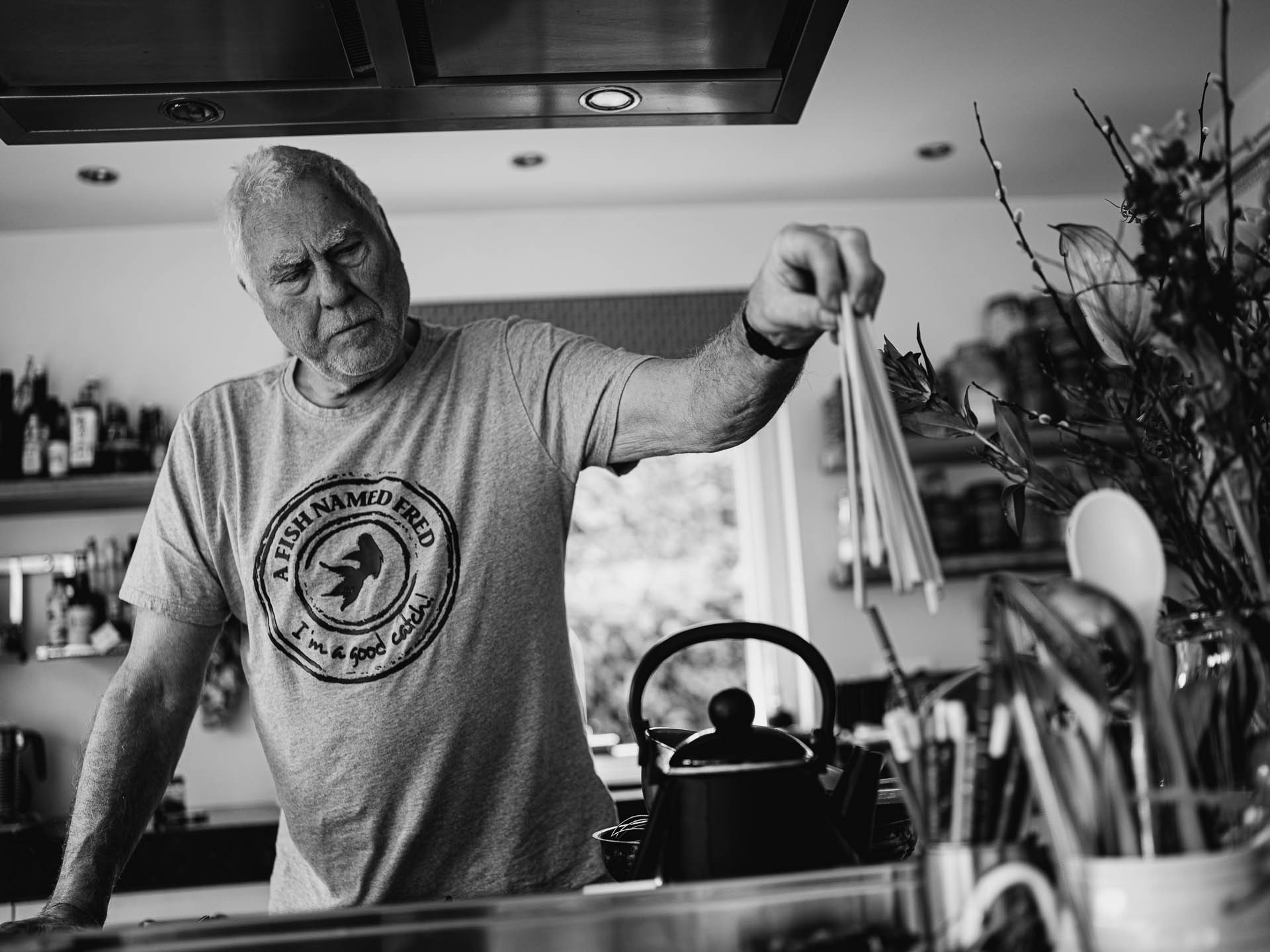
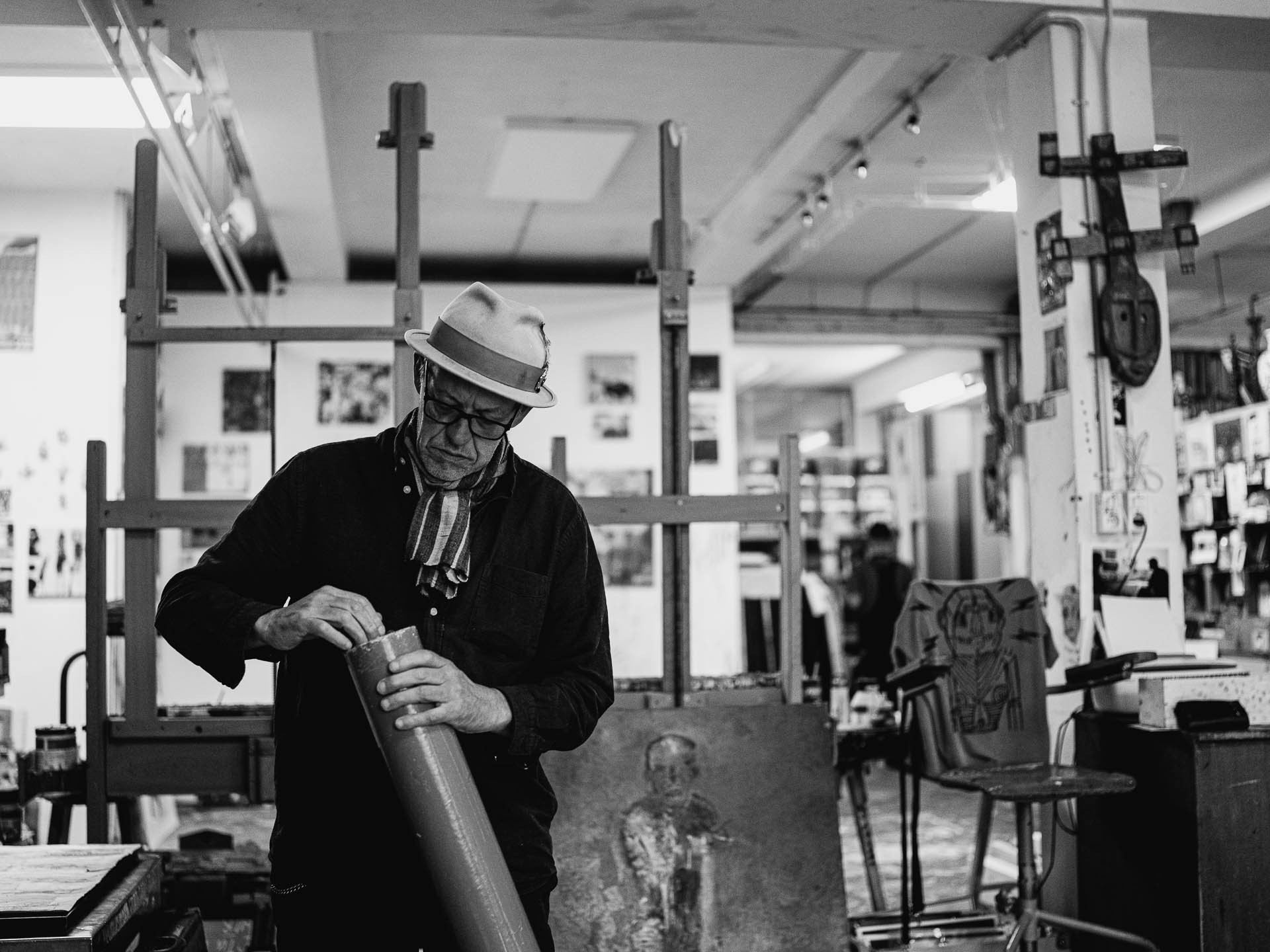
For the exhibition Three of a Kind at Pennings Foundation, Cas followed Gerard, Rik and Joshua van Iersel in their studios. It was exactly the kind of environment in which his way of working comes into its own. Not a neutral studio in which someone is separated from their work, but the place where ideas, materials and half-finished projects surround them.
What Cas is mainly looking for there is pride. Someone pulling a painting out of a corner and starting to explain why it matters. A maker who, among their own work, suddenly forgets that a camera is present. In the end it makes little difference to Cas whether someone is an artist, a cook or a hobbyist. The most interesting question remains the same: what makes someone light up?
Eindhoven as a city changing before your eyes
Cas lived in Eindhoven for eight years and saw the city change dramatically even in that relatively short period. It is precisely that development he would like to document over a much longer span. Not only the buildings that disappear or are added, but also the tension that arises when growth collides with the need to keep a city recognisable.
He sees a historical line in that. Philips transformed Eindhoven significantly in the last century; now new technology companies, international residents and housing development are causing new shifts. For residents that can feel uncomfortable or even painful. At the same time, according to Cas, change has always been part of Eindhoven’s story.
That makes it interesting for a documentary maker. A photograph that today mainly shows a street, construction site or neighbourhood may, in twenty or fifty years, suddenly become a document of an entire transformation.
Cas joins the jury
Cas van Laar is one of the jury members of the Eindhoven Photography Challenge. Show what Eindhoven means to you in a single photograph and give the jury your own view of the city.
View the Photography ChallengeAbove all, make what you think is great
After more than fifteen years of photography, the advice Cas would give a beginner version of himself is strikingly simple: try a lot, learn the basics, but do not let yourself be driven mad by what other people think photography is supposed to be.
A personal style does not emerge because you design it in advance. It grows out of the subjects you keep returning to, the choices you naturally make more often and the images you would want to make even without an assignment.
“Above all, make things you think are great.”
See more of Cas van Laar
Want to see more portrait and documentary photography by Cas van Laar? His website contains his portfolio and more information about portrait photography and personal documentaries from his studio in Eindhoven. You can also follow Cas on Instagram and LinkedIn. Want to discover more photography from Eindhoven? Read the story of Roy van der Wens, the story of Jan Timmer or browse all stories from makers in Eindhoven.